

Hygeia AnalyticsLogo

Menu

Skip to content
  • Home
  • About Hygeia
    Analytics
    • Dynamic Presentations
    • Keywords and Site Map
    • Hygeia Analytics – Who We Are
    • Why Hygeia?
    • Funding and “Sound Science”
    • Acronyms and Glossary
    • Sign-Up for Updates
  • Nutrition
    • Introduction and Nutrition 101
      • Good Fat Bad Fat
      • Fatty Acids
        • Primer on the Fatty Acids in Milk
      • Impact of Livestock Feeding
    • Antioxidants
      • Organic Farming Elevates Antioxidants
      • Maximizing Antioxidant Intake
    • Organic vs. Conventional Foods
      • Milk and Dairy Products
        • 2018 Grassmilk Paper
        • PLOS ONE Study
        • Dairy Meta-Analysis
      • Multi Food Meta-Analyses
        • Meat Products
        • Plant-Based Foods
        • Smith-Spangler et al.
        • Dangour et al.
        • The Organic Center Report
      • Food Specific Comparisons
        • General
        • Fruits and Vegetables
        • Wine and Wine Grapes
    • Considering Nutritional Quality
      • Impact of Genetics and Production Systems
      • New Tool for Food Security
      • Transforming Jane Doe’s Diet
      • Nutritional Quality Index
    • Nutrient Decline
    • Other Choices and Challenges
      • Human Health
      • Dietary Choices
  • Pesticides
    • Usage
      • Pesticide Use Data Sources
        • Pesticide Use Indicators
      • PUDS – The Pesticide Use Data System
    • Dietary Risks
      • The Dietary Risk Index (DRI)
    • Risk Assessment and Regulation
      • Food Quality Protection Act (FQPA)
      • Glyphosate/Roundup Case Study
      • The Lowdown on Roundup
      • Does Glyphosate/Roundup Cause Cancer?
      • 2019 Glyphosate Genotoxicity Paper
    • Impacts of GE on Pesticide Use
    • Environmental, Human Health, and Other Impacts of Pesticides
  • Ag Biotech
    • Key Historical Documents – Donald Duvick
    • Key Historical Documents – Arpad Pusztai
    • Herbicide Resistant Crops
    • Weed Resistance
    • Bt Transgenic Crops
    • Resistant Insects
    • Health Risks and Safety Assessments
    • Regulation of GE Crop Technology
    • Marketing, Economics, and Public Relations
    • Patenting and Intellectual Property Issues
    • Labeling
  • Other Issues
    • Animal Products
    • The Future of Food
    • Global Food Security
    • Natural Resources and Climate Change
    • Alternatives to Industrial Ag
    • Policy and Politics
    • Scientific Integrity
    • Soil Health
    • Yields
  • Recent Posts
    • Hot Science
    • In The News
    • Hygeia’s Blog
  • Special
    Coverage
    • Organic Apples in Washington State
    • Dicamba Drift Crisis
    • Organic Food Consumption Lowers Cancer Risk
    • Organic Integrity

Roundup is Safe Enough to Drink, Right?

Posted on August 18, 2020 in Hygeia's Blog, Pesticides | 1,600 Views

By: Dr. Chuck Benbrook

Many people ask me  — Why the big punitive damage awards in the Roundup-Non-Hodgkins Lymphoma (NHL) litigation?

Easy answer — Monsanto’s (now Bayer’s) lousy product “stewardship” behavior.

Company representatives and others up and down the herbicide supply chain have been reassuring Roundup users for almost a half-century that Roundup is as safe as common household products like coffee, acetaminophen, and apple cider vinegar.

And we all have heard more than once that Roundup is “safe enough to drink,” and you can hear it yourself from the farmer’s mouth – just scroll to the bottom of this post.
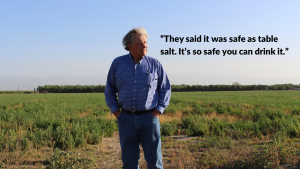
John Barton, a cotton farmer from California was a Farmer-Plaintiff in the recent Roundup cancer trials. He was diagnosed with NHL in 2015 and is quoted here from a May 20, 2019 NBCNews.com story.

This claim that has surfaced many times in various dialogues on Hygeia’s Facebook and Twitter posts. Not a big deal when it is just a troll doing their thing, but not good when a farmer or landscaper that actually uses Roundup thinks this is true.

Such claims by anyone making or selling a pesticide are UNLAWFUL. Monsanto’s systemic negligence in stopping people from overstating Roundup’s “safety” is one reason why juries have awarded such sizable punitive damage awards. Want to see the tab? Hint – there are a lot of zeros!

BTW, for the non-lawyers among us, punitive damage awards are intended to punish bad behavior. In the Roundup-NHL litigation, after 6 to 8 weeks of trial, all three juries had heard enough about Monsanto’s bad behavior to convince them that Monsanto/Bayer not only deserved, but NEEDED a really big dose of punishment, in the hope it would change their behavior.
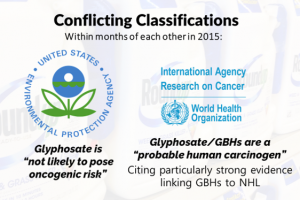
The message has clearly not gotten through, at least in terms of Monsanto/Bayer’s willingness to make Roundup safer.

Monsanto/Bayer has announced far and wide that Roundup is safe. EPA is right and IARC is wrong (for context look right). Monsanto/Bayer have promised farmers that there will be no changes in how Roundup is formulated, labeled, and can be applied in accord with label requirements, including no new PPE requirements.

In terms of Monsanto/Bayer’s willingness to make Roundup safer, the punitive damage awards have clearly not accomplished their intended purpose (changing corporate behavior).

So, almost all of us will continue to get our daily dose of glyphosate via our food. Farmers and applicators will continue to be exposed to U.S. Roundup formulations that are far more toxic than the Roundup products Monsanto/Bayer has been selling in Europe for almost 5 years now. I could go on…and on…

Check out “The New Bayer Acid Test” to see the steps Monsanto/Bayer should take, and needs to take, if they want to make “safety job #1” and save most Roundup uses.


Posted in Hygeia's Blog, Pesticides | Tagged Cancer Risks, Dietary Risks, Glyphosate, Human Health, Pesticide Impacts. Dietary Risks, Policy and Politics, Roundup Ready

Related Posts

Will This 9th Circuit Order Finally Get Chlorpyrifos Out of the Food Supply?→

Research Links Childhood Stress to the Microbiome in Pregnancy, and Suggests Protective Role of Omega-3 Fatty Acids→

FAQs re Biden-Harris Ag and EPA Transition Priorities→

Implications of EPA’s Decision to Renew Dicamba Registration for Over-the-Top Use→

Neonic Seed Treatments in the (Science) News→

Dr. Benbrook Testifies Before the Philadelphia City Council as they Consider Glyphosate Ban→

The DRI — A New Tool for Tracking Pesticides in Food→

Guest Blog: The Big Meat Gang Is Getting Awfully Smelly→

©2016 Hygeia-Analytics.com. All Rights Reserved.

Menu