
Hygeia AnalyticsLogo

Menu

Skip to content
  • Home
  • About Hygeia
    Analytics
    • Dynamic Presentations
    • Keywords and Site Map
    • Hygeia Analytics – Who We Are
    • Why Hygeia?
    • Funding and “Sound Science”
    • Acronyms and Glossary
    • Sign-Up for Updates
  • Nutrition
    • Introduction and Nutrition 101
      • Good Fat Bad Fat
      • Fatty Acids
        • Primer on the Fatty Acids in Milk
      • Impact of Livestock Feeding
    • Antioxidants
      • Organic Farming Elevates Antioxidants
      • Maximizing Antioxidant Intake
    • Organic vs. Conventional Foods
      • Milk and Dairy Products
        • 2018 Grassmilk Paper
        • PLOS ONE Study
        • Dairy Meta-Analysis
      • Multi Food Meta-Analyses
        • Meat Products
        • Plant-Based Foods
        • Smith-Spangler et al.
        • Dangour et al.
        • The Organic Center Report
      • Food Specific Comparisons
        • General
        • Fruits and Vegetables
        • Wine and Wine Grapes
    • Considering Nutritional Quality
      • Impact of Genetics and Production Systems
      • New Tool for Food Security
      • Transforming Jane Doe’s Diet
      • Nutritional Quality Index
    • Nutrient Decline
    • Other Choices and Challenges
      • Human Health
      • Dietary Choices
  • Pesticides
    • Usage
      • Pesticide Use Data Sources
        • Pesticide Use Indicators
      • PUDS – The Pesticide Use Data System
    • Dietary Risks
      • The Dietary Risk Index (DRI)
    • Risk Assessment and Regulation
      • Food Quality Protection Act (FQPA)
      • Glyphosate/Roundup Case Study
      • The Lowdown on Roundup
      • Does Glyphosate/Roundup Cause Cancer?
      • 2019 Glyphosate Genotoxicity Paper
    • Impacts of GE on Pesticide Use
    • Environmental, Human Health, and Other Impacts of Pesticides
  • Ag Biotech
    • Key Historical Documents – Donald Duvick
    • Key Historical Documents – Arpad Pusztai
    • Herbicide Resistant Crops
    • Weed Resistance
    • Bt Transgenic Crops
    • Resistant Insects
    • Health Risks and Safety Assessments
    • Regulation of GE Crop Technology
    • Marketing, Economics, and Public Relations
    • Patenting and Intellectual Property Issues
    • Labeling
  • Other Issues
    • Animal Products
    • The Future of Food
    • Global Food Security
    • Natural Resources and Climate Change
    • Alternatives to Industrial Ag
    • Policy and Politics
    • Scientific Integrity
    • Soil Health
    • Yields
  • Recent Posts
    • Hot Science
    • In The News
    • Hygeia’s Blog
  • Special
    Coverage
    • Organic Apples in Washington State
    • Dicamba Drift Crisis
    • Organic Food Consumption Lowers Cancer Risk
    • Organic Integrity

Guest Blog: Steve Smith on EPA’s Decision to Extend Extendimax et al.

Posted on November 2, 2018 in Environmental Impacts, Hygeia's Blog, Pesticides | 593 Views

Note to Readers: Steve Smith, Chairman and founder of the Save Our Crops Coalition and R+D Director of Red Gold (a major midwest tomato processor), has been actively engaged in the evolution and approval of dicamba-resistant crops. He has raised concern — and more recently alarm — over the damage done to non-target crops, trees, shrubs, and vines in areas heavily sprayed with dicamba.

In a September 30th guest blog, we shared Steve’s “closing arguments” to EPA regarding why the agency should significantly limit further, post-emergence use of dicamba.

Here, Steve shares his reactions to the October 31, 2018 EPA decision to extend Extendimax and other post-emergence dicamba labels for use on GE crops, lightly edited for clarity.

Our Dicamba Watch presentation provides further details to help readers catch up on the  developments leading to the current EPA decision.
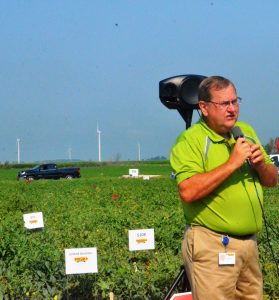

Steve Smith speaking at tour of a Red Gold tomato field.

Just in case anyone asks or is curious, here are my comments to the press this morning.

It is a very easy assessment.  This is an unacceptable ruling.  It continues to focus on the applicator (only certified applicators) and more training, instead of the real problem, which is the chemistry itself.

Dicamba is dicamba and as of now, it moves where it is not supposed to go.  It doesn’t move every time, but what if even only 3% or 5% of the applications have issues? Would you get on an airplane with a 3% chance of a failure?

EPA could have easily done a one year registration to see how the 2019 crop season turns out. Agriculture in general is facing unprecedented scrutiny about all herbicide applications, and having a “bad actor” out there like dicamba is going to do nothing but inflame public sentiment about crop-protectant materials to an even greater degree than already the case.

When the general public, and especially rural residents, start to realize and understand why trees and landscapes are being injured, we can expect even more intense scrutiny.  Ironically, my own home was hit with over $9,000 of dicamba-induced damage done to my trees.

EPA’s two-year extension of the conditional registration will fail to protect the public — and farmers.  Dr. Ford Baldwin put it best.  “We know we can raise soybeans without dicamba, but we can’t raise other crops with dicamba.”

“We know we can raise soybeans without dicamba, but we can’t raise other crops with dicamba.”

–Dr. Ford Baldwin, Arkansas Extension Service (retired)

The long-term ramifications of this product and technology, and this EPA decision, will be serious and extensive. I predict we will look back on this decision as a consequential, missed opportunity, when EPA could have started the process of putting this crazed genie back in her bottle.

Dicamba will eventually not be used.  I was hoping for regulatory relief beginning in the 2019 crop season, but now we move forward with no meaningful changes and new, unclear economic rules of the road. Will applicators typically be held responsible for drift and damage, because the companies and the EPA say drift and damage won’t happen if applicators follow the new and “improved” label?
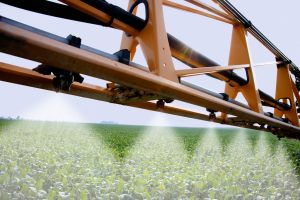
If the new label requirements are judged as effective in preventing drift, as the registrants assert, does that mean pesticide applicators will automatically be at fault for any damage that still occurs?

If applicators are willing to take on the liability risk inherent in every application,  the spread of weeds resistant to dicamba will eventually curtail use, but not until considerable damage is done to innocent farmers and landowners, and to agriculture’s reputation.

This is very disappointing. The Save Our Crops Coalition is advocating for a pre-plant only label.  This wouldn’t have totally stopped all the issues (see Arkansas in 2018), as some trees, orchards and vineyards would have already been leafed out, but it would have gone a long ways towards reducing the problems to a more manageable level.

On a field sprayed with dicamba in 2018, for example, we are also advocating for a subsequent restriction in 2019 on additional dicamba applications. This is a commonsense option to help slow the spread of resistance to dicamba, which is bound to happen if the product is used on both corn and soybeans year-after-year. And then what?

Source:

Steve Smith, email to members of the Save Our Crops Coalition, November 1, 2018.

Posted in Environmental Impacts, Hygeia's Blog, Pesticides | Tagged Dicamba, Guest Blog, Herbicide Resistance, Pesticide Impacts, Policy and Politics

Related Posts

Will This 9th Circuit Order Finally Get Chlorpyrifos Out of the Food Supply?→

FAQs re Biden-Harris Ag and EPA Transition Priorities→

Implications of EPA’s Decision to Renew Dicamba Registration for Over-the-Top Use→

Neonic Seed Treatments in the (Science) News→

Dr. Benbrook Testifies Before the Philadelphia City Council as they Consider Glyphosate Ban→

Guest Blog: The Big Meat Gang Is Getting Awfully Smelly→

Why Promoting Organic Integrity Must Become a Top Priority for USDA→

Guest Blog: Finding the Root Cause of Organic Fraud→

©2016 Hygeia-Analytics.com. All Rights Reserved.

Menu