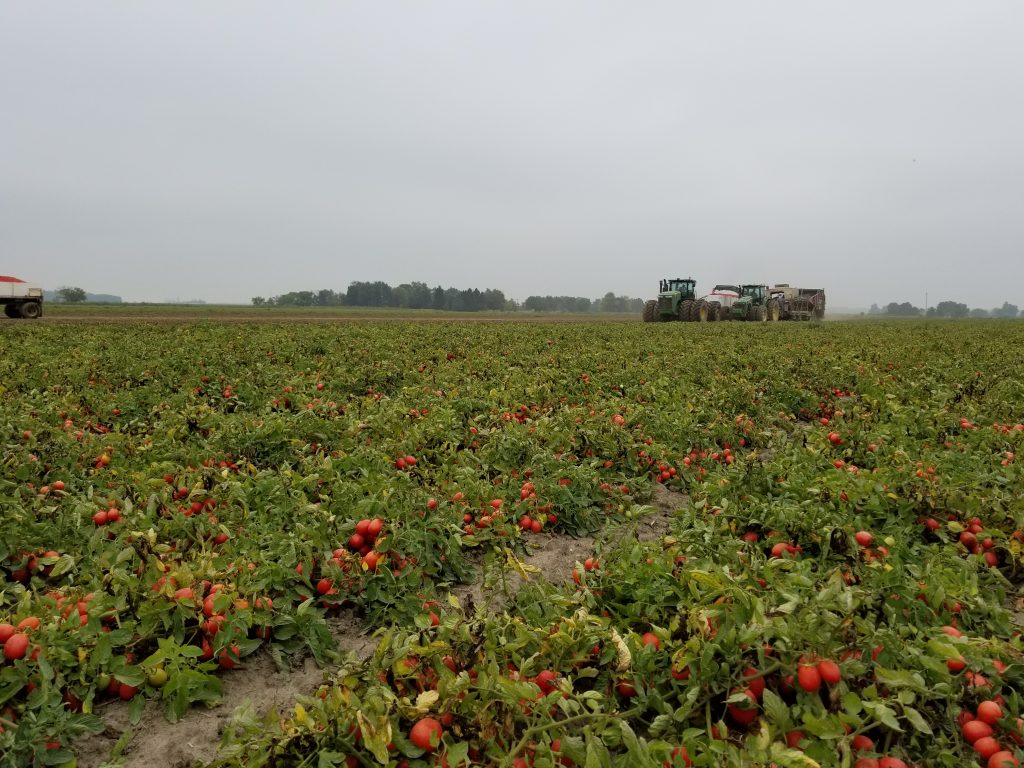
Steve Smith is the Director of Agriculture for Red Gold, which processes 80% of the tomato crop in the Midwest, and Chairman of the Save Our Crops Coalition. He recently traveled from Indiana to Washington D.C. for a September 28, 2018 meeting with senior EPA officials.
The topic — the EPA’s pending decision on whether, and under what terms, to extend the registration of dicamba-based herbicides labeled for post-emergence applications on GMO soybeans and cotton.
No one has done more than Steve to warn the EPA, the farm community, and anyone willing to listen, about the adverse impacts of widespread planting of dicamba-resistant crops.
And he started long ago. See, for example, Smith’s prescient written testimony delivered September 30, 2010 before the Subcommittee on Domestic Policy of the House Committee on Oversight and Government Reform. The full hearing record is accessible in the Congressional archive.
More recently, we featured Steve’s insights in October 2017 following the first growing season with widespread, legal use of the new dicamba herbicide formulations (as opposed to the illegal, off-label use that occurred in 2016 — for that story see Dicamba Watch).
A lightly edited version of Steve’s follow-up email to the EPA officials he met with in D.C. appears below. Thanks to Steve for permission to share his thoughts more widely, as the agency again weighs an important regulatory decision for dicamba. Note: links, photos and captions were added by Hygeia Analytics.
September 30, 2018 email from Steve Smith to EPA Officials
Ms. Beck, Ms. Bennett, Mr. Baptist and Mr. Bolen:
First I want to thank you for your commitment of time to meet with me on Friday. The chance to tell the story of what I see is a real threat to all of agriculture, not just specialty crops, was really appreciated.
During our meeting, I had mentioned my Congressional testimony from 2010, so I have attached that to this note. In it you’ll see some bolded statements concerning the risk to specialty crops, emphasizing that the widespread use of dicamba is incompatible with Midwestern agriculture, and that granting registrations that markedly increase usage of dicamba is poor public policy.
It is my hope that you can see that these statements are not only true, but unfortunately a reality that has harmed all segments. The public will become more aware of what is happening, and all of agriculture will suffer a “black-eye” when everyone figures out the source of the damages to sensitive landscapes and trees, in addition to non-tolerant crops.
Other segments of Midwestern agriculture are beginning to take serious note of the threat of dicamba use. Recently Beck’s Seeds (the largest independent seed producer) and Stine Seed authored a letter to EPA explaining their concerns about grower choices. But even deeper in their concerns has been the issue of seed germination problems from off-target dicamba movement.
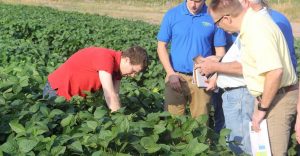
When dicamba hits soybean seed, the germination is greatly reduced so…many acres of soybean seed crops will be unacceptable for use as seed in 2019.
AAPCO [Association of American Plant Control Officials] has expressed their concerns about what this issue is doing to the regulatory departments in all the affected states, and Indiana specifically commented in a letter concurring with the AAPCO note.
At a recent meeting of the Indiana Pesticide Review Board, the State Chemist described their department not as the investigative and regulatory agency they were designed to be, but as the “Dicamba Response Team,” a description that emphasizes how their department has been inundated, and fully absorbed in investigating the problems dicamba has caused.
In our meeting, I briefly mentioned that my own home was hit by dicamba. I just received an estimate of damages from a professional landscaper, totaling more than $9,000 in just my modest-sized yard… [this is] an example of what will be happening more regularly to the general public and, I predict, they will not stand for it in the long run.
Any registration of dicamba that even remotely resembles the status quo will harm all of agriculture. As I suggested in our meeting, I recommend that no post-planting applications should be approved. This restriction will not completely eliminate all potential damage, but would go a long way to reduce problems by a major percentage.
Thank you again for your time. I do realize the strain this technology has caused all regulatory agencies in the country. The EPA is at the focal point of trying to do the right thing for the future. The clamoring voices of the manufacturers and special interest groups demanding reregistration should not drown out the voices of those who understand, and will bear the risks involved. Those risks are both predictable and preventable.
Sincerely,
Steve Smith
Chairman, Save Our Crops Coalition
More Dicamba Resources from Hygeia:
For more details on why the continuation of post-planting or post-emergence use of dicamba has become so controversial, see our Dicamba Watch.
For those interested in the long history of concerns over this herbicide, see our dicamba Herbicide Timeline:
- Part I: Discovery and Commercialization 1940-2017
- Part II: Regulatory Milestones 1970-2017
- Part III: Dicamba Use 1970-2017
Each of the three parts of our “Dicamba Diary” is accessible in four formats:
- Online Prezi;
- Portable Prezi file (to place on your computer);
- Vimeo video (click run and just watch); and
- Word file with the content of all slides.
Plus, a full bibliography of the unfolding dicamba crisis is here.