
Hygeia AnalyticsLogo

Menu

Skip to content
  • Home
  • About Hygeia
    Analytics
    • Dynamic Presentations
    • Keywords and Site Map
    • Hygeia Analytics – Who We Are
    • Why Hygeia?
    • Funding and “Sound Science”
    • Acronyms and Glossary
    • Sign-Up for Updates
  • Nutrition
    • Introduction and Nutrition 101
      • Good Fat Bad Fat
      • Fatty Acids
        • Primer on the Fatty Acids in Milk
      • Impact of Livestock Feeding
    • Antioxidants
      • Organic Farming Elevates Antioxidants
      • Maximizing Antioxidant Intake
    • Organic vs. Conventional Foods
      • Milk and Dairy Products
        • 2018 Grassmilk Paper
        • PLOS ONE Study
        • Dairy Meta-Analysis
      • Multi Food Meta-Analyses
        • Meat Products
        • Plant-Based Foods
        • Smith-Spangler et al.
        • Dangour et al.
        • The Organic Center Report
      • Food Specific Comparisons
        • General
        • Fruits and Vegetables
        • Wine and Wine Grapes
    • Considering Nutritional Quality
      • Impact of Genetics and Production Systems
      • New Tool for Food Security
      • Transforming Jane Doe’s Diet
      • Nutritional Quality Index
    • Nutrient Decline
    • Other Choices and Challenges
      • Human Health
      • Dietary Choices
  • Pesticides
    • Usage
      • Pesticide Use Data Sources
        • Pesticide Use Indicators
      • PUDS – The Pesticide Use Data System
    • Dietary Risks
      • The Dietary Risk Index (DRI)
    • Risk Assessment and Regulation
      • Food Quality Protection Act (FQPA)
      • Glyphosate/Roundup Case Study
      • The Lowdown on Roundup
      • Does Glyphosate/Roundup Cause Cancer?
      • 2019 Glyphosate Genotoxicity Paper
    • Impacts of GE on Pesticide Use
    • Environmental, Human Health, and Other Impacts of Pesticides
  • Ag Biotech
    • Key Historical Documents – Donald Duvick
    • Key Historical Documents – Arpad Pusztai
    • Herbicide Resistant Crops
    • Weed Resistance
    • Bt Transgenic Crops
    • Resistant Insects
    • Health Risks and Safety Assessments
    • Regulation of GE Crop Technology
    • Marketing, Economics, and Public Relations
    • Patenting and Intellectual Property Issues
    • Labeling
  • Other Issues
    • Animal Products
    • The Future of Food
    • Global Food Security
    • Natural Resources and Climate Change
    • Alternatives to Industrial Ag
    • Policy and Politics
    • Scientific Integrity
    • Soil Health
    • Yields
  • Recent Posts
    • Hot Science
    • In The News
    • Hygeia’s Blog
  • Special
    Coverage
    • Organic Apples in Washington State
    • Dicamba Drift Crisis
    • Organic Food Consumption Lowers Cancer Risk
    • Organic Integrity

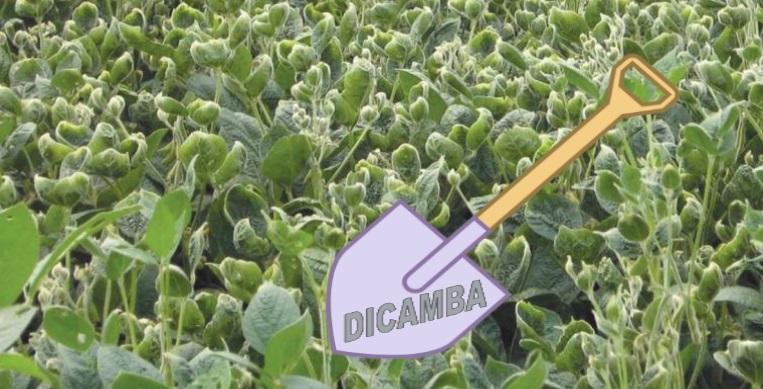
Calling a Spade a Spade (aka the Dicamba Train Wreck)

Posted on August 31, 2017 in GMOs, In The News, Pesticides | 436 Views

A highly-respected farm magazine editor, Greg Horstmeier, has called a spade a spade re the unfolding, dicamba crop-damage train wreck occurring across corn-soybean country.

This is a must-read piece, because of the important historical context it provides. Horstmeier’s play-by-play of how we got here is a chilling account of how badly farm industry leaders and their organizations, agribusiness, and the regulatory community have “managed” herbicide-resistance technology, from the get go.

And it is going to get far worse fast. There is 40 million acres worth of dicamba-resistant soybean seed in the pipeline, nearly one-half of the soybean seed farmers will plant next year. Another chunk of the 2018 national soybean seed supply will be 2,4-D+glyphosate+fop resistant.

Many farmers will buy the dicamba-resistant seeds for protection from drift coming off neighboring fields. Ironically, some of these dicamba-resistant fields will be damaged by 2,4-D drift, and vice versa.

Then the companies will come up with a brilliant idea – three-way resistance in soybeans to glyphosate, 2,4-D, and dicamba (and perhaps glufosinate and the fops too).

And so it will go on, until the seed companies have milked the technology for all its worth, at the expense of farmers who will be left in the lurch with the world’s most daunting complex of multiple-herbicide-resistant weeds and a herbicide toolkit running on empty.
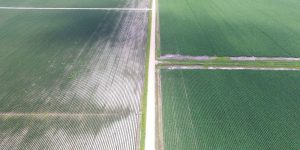
Evidence of dicamba drift damage: the field to the right is herbicide-tolerant, the one on the left is not.

We are watching perhaps one of the most colossal failures of technology adoption and private sector R+D investment decisions in the history of U.S. Ag, Inc. – a failure enabled by farm community and regulatory acquiescence.

While the focus will remain for the foreseeable future on drift and crop damage from the new dicamba- and 2,4-D resistant crops, soon people will start asking questions about the human health implications of the huge increase in herbicide use unfolding across the Heartland.

Both dicamba and 2,4-D are known to raise the risk of a suite of reproductive problems and birth defects, and data is emerging that suggests pregnant women and infants living in heavily sprayed regions may also pay a price as the herbicide treadmill kicks into high gear.

For more on these emerging public-health concerns, follow the work of the project on Herbicide Use and Birth Outcomes in the Midwest.

Source:

Greg Horstmeier, “Editor’s Notebook: Dicamba’s PTFE Problem,” The Progressive Farmer/DTN,  August 29, 2017.

Posted in GMOs, In The News, Pesticides | Tagged 24D, Dicamba, GE Impacts, Herbicide Resistance, Pesticide Impacts

Related Posts

Will This 9th Circuit Order Finally Get Chlorpyrifos Out of the Food Supply?→

Implications of EPA’s Decision to Renew Dicamba Registration for Over-the-Top Use→

Neonic Seed Treatments in the (Science) News→

Dr. Benbrook Testifies Before the Philadelphia City Council as they Consider Glyphosate Ban→

This Monster Dose of Innovation is Reason for Hope→

New Iowa Centric Verse of the Dicamba Blues→

California Study Raises the Question: Are Monarchs the New Canary in the Coal Mine?→

Europe is Calling for a 50% Reduction in Pesticide Use by 2030, But Insect Advocates Say More is Needed→

©2016 Hygeia-Analytics.com. All Rights Reserved.

Menu