
Hygeia AnalyticsLogo

Menu

Skip to content
  • Home
  • About Hygeia
    Analytics
    • Dynamic Presentations
    • Keywords and Site Map
    • Hygeia Analytics – Who We Are
    • Why Hygeia?
    • Funding and “Sound Science”
    • Acronyms and Glossary
    • Sign-Up for Updates
  • Nutrition
    • Introduction and Nutrition 101
      • Good Fat Bad Fat
      • Fatty Acids
        • Primer on the Fatty Acids in Milk
      • Impact of Livestock Feeding
    • Antioxidants
      • Organic Farming Elevates Antioxidants
      • Maximizing Antioxidant Intake
    • Organic vs. Conventional Foods
      • Milk and Dairy Products
        • 2018 Grassmilk Paper
        • PLOS ONE Study
        • Dairy Meta-Analysis
      • Multi Food Meta-Analyses
        • Meat Products
        • Plant-Based Foods
        • Smith-Spangler et al.
        • Dangour et al.
        • The Organic Center Report
      • Food Specific Comparisons
        • General
        • Fruits and Vegetables
        • Wine and Wine Grapes
    • Considering Nutritional Quality
      • Impact of Genetics and Production Systems
      • New Tool for Food Security
      • Transforming Jane Doe’s Diet
      • Nutritional Quality Index
    • Nutrient Decline
    • Other Choices and Challenges
      • Human Health
      • Dietary Choices
  • Pesticides
    • Usage
      • Pesticide Use Data Sources
        • Pesticide Use Indicators
      • PUDS – The Pesticide Use Data System
    • Dietary Risks
      • The Dietary Risk Index (DRI)
    • Risk Assessment and Regulation
      • Food Quality Protection Act (FQPA)
      • Glyphosate/Roundup Case Study
      • The Lowdown on Roundup
      • Does Glyphosate/Roundup Cause Cancer?
      • 2019 Glyphosate Genotoxicity Paper
    • Impacts of GE on Pesticide Use
    • Environmental, Human Health, and Other Impacts of Pesticides
  • Ag Biotech
    • Key Historical Documents – Donald Duvick
    • Key Historical Documents – Arpad Pusztai
    • Herbicide Resistant Crops
    • Weed Resistance
    • Bt Transgenic Crops
    • Resistant Insects
    • Health Risks and Safety Assessments
    • Regulation of GE Crop Technology
    • Marketing, Economics, and Public Relations
    • Patenting and Intellectual Property Issues
    • Labeling
  • Other Issues
    • Animal Products
    • The Future of Food
    • Global Food Security
    • Natural Resources and Climate Change
    • Alternatives to Industrial Ag
    • Policy and Politics
    • Scientific Integrity
    • Soil Health
    • Yields
  • Recent Posts
    • Hot Science
    • In The News
    • Hygeia’s Blog
  • Special
    Coverage
    • Organic Apples in Washington State
    • Dicamba Drift Crisis
    • Organic Food Consumption Lowers Cancer Risk
    • Organic Integrity

Are We Ready for Grassland 2.0?

Posted on March 28, 2020 in Animals, Environmental Impacts, In The News | 302 Views

A thoughtful new piece published online by Aeon calls for a reboot of how the nation’s livestock farmers do business.

Grassland 2.0 calls for our livestock farmers to also become grass farmers.  It is a re-invention of a very old wheel: the idea that animals and pasture can work together as a kind of ecosystem.

The campaign comes out of the Department of Agronomy at the University of Wisconsin-Madison and is described on their website as a “collaborative group of farmers, researchers, and public and private sector leaders working to develop pathways for increased farmer profitability, yield stability and nutrient and water efficiency, while improving water quality, soil health, biodiversity, and climate resilience through grassland-based agriculture.”

The Aeon describes how farmers today have achieved maximized yields in livestock production by reliance on three key “intensive practices”:

  1. Genetic tweaks of plants used for feed and the animals themselves
  2. Synthetic fertilizers, pesticides, and “growth compounds”
  3. Concentrating livestock operations.

But, all three come, in turn, have two big downsides: 1) the resulting profits generally end up in the pockets of suppliers and not farmers, and 2) the “devastating environmental degradation” associated with these inputs is passed on to society (Jackson, 2020).

But, if we “recalibrate our expectations about the role of farming and food in our lives” and give up our current tendency to “squeeze every possible harvestable unit from the land,” we can find another way.

In a Grassland 2.0 system, “farmers are compensated for building and storing carbon and nutrients in soils, providing habitat for wildlife, contributing to bucolic landscapes, and perhaps, reducing their yields” (Jackson, 2020).

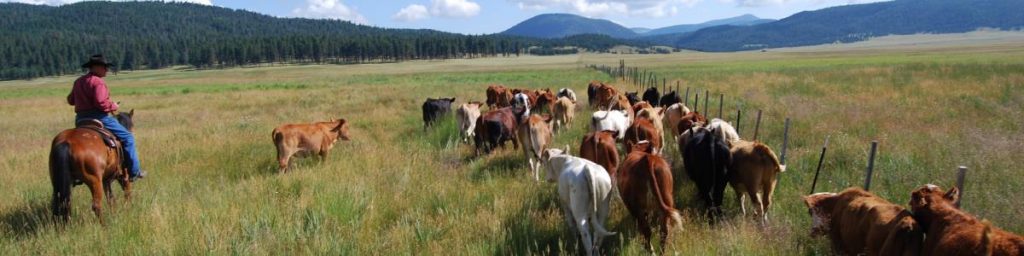
From a land management perspective, Grassland 2.0 does away with confinement livestock operations by allowing animals to graze on “well-managed grasslands.”  Improving soil quality and practicing place-based regenerative agriculture can allow livestock farmers to support their animals from the land, rather than relying on grains and other external resources to feed stock.

These grasslands not only keep livestock fed and producing healthy milk and meat, they also provide a whole host of other environmental and social benefits (Jackson, 2020):

  • Climate resiliency
  • Water quality
  • Flood mitigation
  • Promote biodiversity

“It is wrong,” the piece claims, “to attack these sustainable practices as ‘uneconomic’ when we consider the ways in which government props up current extractive farming practices” (Jackson, 2020).  In particular subsidies for crops like corn and soy have to go and be replaced with those that incentive regenerative approaches and healthy foods and farms.

It feels like progress that reputable agriculture programs are promoting sustainable techniques.  The increasing damage caused by herbicide use and practices that deprive soil of nutrients is causing more and more people to ask “What’s next?” for agriculture.

Source:

Randall Jackson, “A vision for agriculture,” Aeon, Date Published: March 17, 2020; Date Accessed: March 27, 2020.

Posted in Animals, Environmental Impacts, In The News | Tagged Climate Change, Future of Food, Meat, Natural Resources

Related Posts

Research Links Childhood Stress to the Microbiome in Pregnancy, and Suggests Protective Role of Omega-3 Fatty Acids→

FAQs re Biden-Harris Ag and EPA Transition Priorities→

Guest Blog: The Big Meat Gang Is Getting Awfully Smelly→

So What About the Integrity of the U.S. Organic Grain Supply?→

This Monster Dose of Innovation is Reason for Hope→

The Down Side of Dust in the Wind→

New Video Highlights Benefits of Animals on Pasture→

Early-Life Insecticide Exposure Compromises Brain Development in Bees→

©2016 Hygeia-Analytics.com. All Rights Reserved.

Menu