
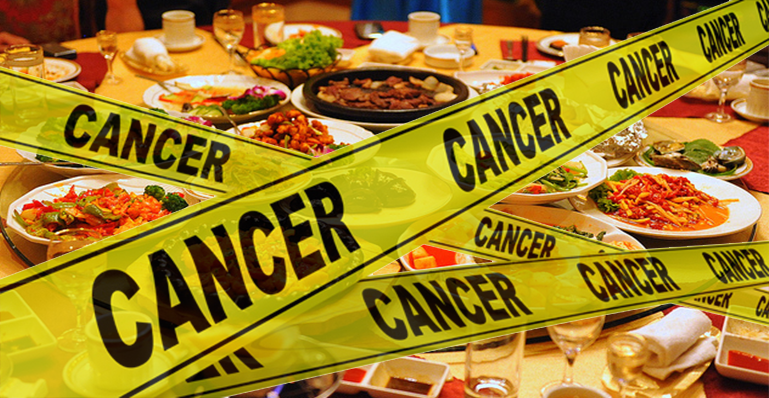
There is a new epidemiology paper in JAMA Internal Medicine by a team of French government scientists that reports a 25% decrease in overall cancer risk from relatively high levels of organic food consumption, compared to little or no consumption, among a large cohort (just under 69,000 individuals, with 1,340 incident cancer cases four years post study enrollment).
Sizable and highly significant reductions in prevalence were seen for breast cancer, non-Hodgkin lymphoma (NHL), and all lymphomas. See our Hot Science piece for more details on the study’s design and remarkable findings.
The team hypothesizes that the reduction in pesticide dietary exposure among study participants reporting a high-level of organic food intake is the key factor driving these results.
True believers in organic food and farming systems will see proof and vindication in this paper, while defenders of the pesticide-status quo will dismiss it, calling it something between “seriously flawed” and “garbage science.”
One thing for sure — this paper should increase the interest in bigger and better epidemiological studies in which more sophisticated measures of pesticide exposure are used (e.g., biomonitoring efforts measuring levels in urine, like these covered on our Managing Weeds for Healthy Kids project bibliography).
Among all cancers by far the greatest reduction in risk was seen for non-Hodgkin lymphoma. Those who consumed more organic food most often had an astonishing 86% reduction in NHL, a finding highlighting in the New York Times coverage of the French study.
“The reductions in lymphomas may not be all that surprising,” says the Times. “Epidemiological studies have consistently found a higher incidence of some lymphomas among people like farmers and farm workers who are exposed to certain pesticides through their work.”
With all the national news and awareness about this deadly and so very costly disease, these last few weeks seem like NHL’s 15-minutes of infamy.
For one, Microsoft co-founder Paul Allen’s death just weeks after his NHL came roaring back, despite access to the best medical care available.
And Lee Johnson’s trial, verdict, and financial award for his NHL, especially given the news from Monday of this week that Judge Bolanos has upheld the verdict and ruled that the compensatory damages award will stand.
There is also some good news for Bayer, the proud new owner of Monsanto, in Judge Bolanos’s ruling on October 22nd. The judge reduced the jury’s punitive damages award from $250 million to $39 million, a sum equal to the compensatory damages award of $39 million, if Mr. Johnson accepts the judge’s actions without appeal. If not, the issue of the size of the punitive damage award will be retried.
The new French paper does not prove that organic food will reduce NHL risk by over 80%, or overall cancer risks by 25%, but it provides solid evidence that organic food, and reducing pesticide dietary exposures, may indeed markedly reduce cancer risks.
Imagine if consuming predominantly organic food could reduce cancer risk by just 2.5% in the U.S.? This could save tens of thousands of lives!
Not to mention possibly comparable, or even greater reductions in reproductive problems, several birth defects, children with neurological impairment and ADHD/autism/allergies/asthma, and even possibly lessened chronic impairment of kidney and liver function.
Imagine if the U.S. government took cancer prevention seriously, by supporting both research and actions roughly 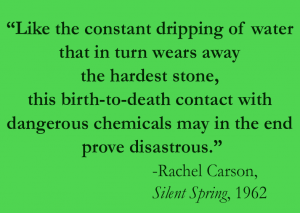 proportional to need?
Why does it take 10 to 20 years, or longer (if ever) for new science documenting a link between exposure to a chemical in food and an increased risk of cancer to result in actions to reduce exposures to that chemical?
Why are simple, tangible, and affordable preventive investments and actions so hard for U.S. farmers and the food industry to fully embrace, and invest in?
Concrete, doable actions like growing the organic fruit and vegetable industries (i.e., like in the Washington State organic tree-fruit industry.
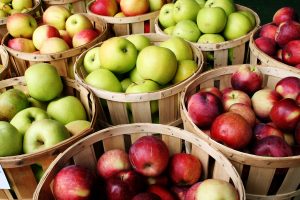
Doing so is true low-hanging fruit (pardon the pun), if the nation is serious about reducing the chances that pesticide use is driving cancer rates and/or severity upward.
Imagine if Wall Street hedge funds, and the newly rich in Silicon Valley and its many sister “valleys” springing up nationwide, understood that the major factor holding back organic fruit and vegetable production are investments in infrastructure.
Imagine if they followed Australia’s lead and made a serious and sustained investment in our growing organic farming industry.
The same sort of investments that brought us today’s food industry, our energy systems, and the kinds of cars we drive and planes we fly in.
Imagine if there is a Donna and Mickey sitting in an “Intro to Ag” college classroom somewhere today, sharing news that organic food might possibly reduce cancer risk by 25%, and wondering out loud if something could be done about it. A discussion much like the ones that led Paul Allen and Bill Gates onto a path of discovery and innovation that has impacted nearly everyone alive in America today.
-the faculty or action of forming new ideas, or images or concepts of external objects not present to the senses, also the ability of the mind to be creative or resourceful.
Imagination is a resource that need not be limited, or limiting, if given room to grow and nurtured. It is something to hope for, and something to believe in.
Sources:
Baudry, Julia, Assmann, Karen E., Touvier, Mathilde, Allès, Benjamin, Seconda, Louise, Latino-Martel, Paule, Ezzedine, Khaled, Galan, Pilar, Hercberg, Serge, Lairon, Denis, & Kesse-Guyot, Emmanuelle, “Association of Frequency of Organic Food Consumption With Cancer Risk: Findings From the NutriNet-Santé Prospective Cohort Study,” JAMA Internal Medicine, Published Online October 22, 2018, doi:10.1001/jamainternmed.2018.4357.
Roni Caryn Rabin, “Can Eating Organic Food Lower Your Cancer Risk?,” New York Times, Published online: October 23, 2018.