
Hygeia AnalyticsLogo

Menu

Skip to content
  • Home
  • About Hygeia
    Analytics
    • Dynamic Presentations
    • Keywords and Site Map
    • Hygeia Analytics – Who We Are
    • Why Hygeia?
    • Funding and “Sound Science”
    • Acronyms and Glossary
    • Sign-Up for Updates
  • Nutrition
    • Introduction and Nutrition 101
      • Good Fat Bad Fat
      • Fatty Acids
        • Primer on the Fatty Acids in Milk
      • Impact of Livestock Feeding
    • Antioxidants
      • Organic Farming Elevates Antioxidants
      • Maximizing Antioxidant Intake
    • Organic vs. Conventional Foods
      • Milk and Dairy Products
        • 2018 Grassmilk Paper
        • PLOS ONE Study
        • Dairy Meta-Analysis
      • Multi Food Meta-Analyses
        • Meat Products
        • Plant-Based Foods
        • Smith-Spangler et al.
        • Dangour et al.
        • The Organic Center Report
      • Food Specific Comparisons
        • General
        • Fruits and Vegetables
        • Wine and Wine Grapes
    • Considering Nutritional Quality
      • Impact of Genetics and Production Systems
      • New Tool for Food Security
      • Transforming Jane Doe’s Diet
      • Nutritional Quality Index
    • Nutrient Decline
    • Other Choices and Challenges
      • Human Health
      • Dietary Choices
  • Pesticides
    • Usage
      • Pesticide Use Data Sources
        • Pesticide Use Indicators
      • PUDS – The Pesticide Use Data System
    • Dietary Risks
      • The Dietary Risk Index (DRI)
    • Risk Assessment and Regulation
      • Food Quality Protection Act (FQPA)
      • Glyphosate/Roundup Case Study
      • The Lowdown on Roundup
      • Does Glyphosate/Roundup Cause Cancer?
      • 2019 Glyphosate Genotoxicity Paper
    • Impacts of GE on Pesticide Use
    • Environmental, Human Health, and Other Impacts of Pesticides
  • Ag Biotech
    • Key Historical Documents – Donald Duvick
    • Key Historical Documents – Arpad Pusztai
    • Herbicide Resistant Crops
    • Weed Resistance
    • Bt Transgenic Crops
    • Resistant Insects
    • Health Risks and Safety Assessments
    • Regulation of GE Crop Technology
    • Marketing, Economics, and Public Relations
    • Patenting and Intellectual Property Issues
    • Labeling
  • Other Issues
    • Animal Products
    • The Future of Food
    • Global Food Security
    • Natural Resources and Climate Change
    • Alternatives to Industrial Ag
    • Policy and Politics
    • Scientific Integrity
    • Soil Health
    • Yields
  • Recent Posts
    • Hot Science
    • In The News
    • Hygeia’s Blog
  • Special
    Coverage
    • Organic Apples in Washington State
    • Dicamba Drift Crisis
    • Organic Food Consumption Lowers Cancer Risk
    • Organic Integrity

Soil Health Coming to Life

Posted on April 11, 2017 in Environmental Impacts, In The News | 154 Views

For years many people worked to promote interest in “soil quality,” a term meant to encompass the physical, chemical and biological properties that make well-managed soils rich, productive, and alive. But to Ray Archuleta, a leading voice for soil conservation within the USDA’s Natural Resources Conservation Service, a new approach to soil management was needed, including a new phrase to capture the essence of what the conventional ag “paradigm” was doing to soil quality and the rural environment.

The new phrase gaining ground in the farm community, among scientists and conservationists, and in policy circles, is “soil health.” Archuleta explains the need for these two new words in an excellent story on the growing soil health movement. He is quoted saying:

“Health denotes life and function. Quality is like the quality of a couch or something.”

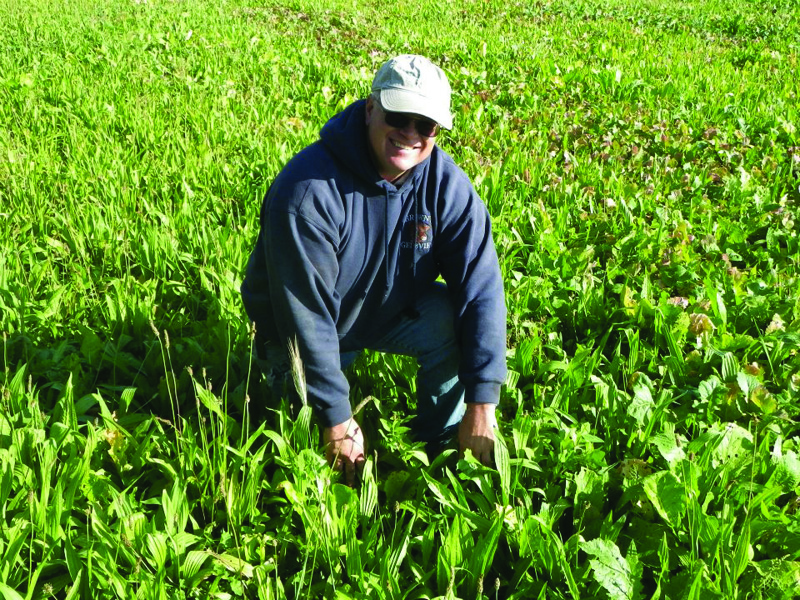
One proven way to build soil health is incorporating a vibrant cover crop between corn, soybean, wheat, and other cash crops. The photo in the upper, right corner features a North Dakota farmer, Gabe Brown. He is one of thousands of farmers who have made remarkable progress in building soil health through the use of cover crops, like the brassica shown in the photo.

The article by Steven Rosenzweig is entitled “How a New Way of Thinking About Soil Sparked a National Movement in Agriculture” and appears in the online magazine Ensia.

It accurately maps the evolution of “soil health” as a framing concept that has helped farmers understand the roots of healthy, productive soils.

Likewise, the soil health movement has found an non-threatening way to focus attention on changes in farm management practices needed to either preserve already healthy soils, or restore health to soils degraded by erosion, loss of organic matter, compaction, the incrementally greater toxic load from the annual, spring mix of fertilizers and pesticides, and in most cases, combinations of the above.

Rosenzweig reports that major funders across the ag space from Monsanto to Walmart, have been lending their support to the cause. He also notes the important catalytic role played by the Farm Foundation and Samuel Roberts Noble Foundation, via what was first called the “Soil Renaissance” project.
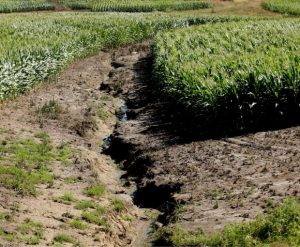
These eroding fields demonstrate the impacts to soil from conventional agricultural systems. A new “soil renassaince” is finding new ways to preserve this precious resource.

About a year ago, the “Soil Renaissance” project morphed into the Soil Health Institute, one of the organizations breaking ground and investing in the promotion of soil health in the scientific community, across extension and in educational circles, and among policy makers. The two quarterbacks behind the Soil Health Institute were Bill Buckner, the CEO of the Noble Foundation and Neil Conklin of the Farm Foundation. These individuals and their organizations created needed space and provided resources to refine and operationalize the concept of soil health.

Restoring the health of America’s soils is, of course, a work in progress. The movement is clearly gaining momentum and recognition, and most importantly, instilling confidence in farming systems that are designed to promote life within the soil, as opposed to the alternative.

For a glimpse of what this promising movement is about, check out the short video on the homepage of the Soil Health Institute.

Source: Steven Rosenzweig, “How a New Way of Thinking About Soil Sparked a National Movement in Agriculture,” Ensia, April 10, 2017.


Posted in Environmental Impacts, In The News | Tagged Soil Quality

Related Posts

FAQs re Biden-Harris Ag and EPA Transition Priorities→

This Monster Dose of Innovation is Reason for Hope→

Organic Farming May Reduce Food Safety Risk From E. coli, New Study Shows→

The Real Organic Project Features our Friends at Full Belly Farm in New Video→

Alfalfa — The Crop That Don’t Get No Respect→

Grasses Are Like Straws Sipping Carbon from the Air→

Where Are Those Two Blades of Grass Where One Used to Grow?→

Bad News for Backers of Ethanol from UW Madison Team→

©2016 Hygeia-Analytics.com. All Rights Reserved.

Menu