
Note to Hygeia Readers —
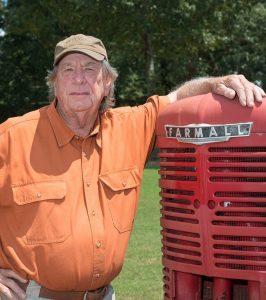
Ford Baldwin is a weed scientist that has worked to promote integrated weed management systems in Arkansas over a long career. In fact, his contribution was recognized this year when he was inducted into the Arkansas Agriculture Hall of Fame.
He has been deeply involved since 2016 in trying to manage the newly introduced dicamba-resistant soybean and cotton varieties that have triggered so many problems within the agricultural community, and between farmers and their rural neighbors. He now works as a consultant and an ag writer; you can see some of his recent articles on Delta Farm Press here.
In the below message emailed to the members of a State of Arkansas board considering the rules governing applications of dicamba in crop year 2019, Baldwin spells out his sense of the stakes on the table as the agricultural community struggles to decide whether dicamba-resistant crop technology is inherently too hot to handle.
Guest Blog: Reprinted email from Ford Baldwin to the Arkansas State Plant Board re: over-the-top use of dicamba. Links and images added by Hygeia.
As a weed scientist but more importantly as a concerned citizen of Arkansas, I urge you to fail the dicamba regulation as proposed. This regulation is completely on the wrong side of the science and will do nothing more than take you back to 2017.
I understand the weed control side of this issue. However, the current formulations of dicamba have a chemistry problem called volatility.
If the problem is fixable, it can only be fixed with chemistry and the companies are the only ones that can do it. Instead of being forced to fix it, they have been given a free pass on this issue by the EPA and by State Regulatory agencies. As a result they have simply been allowed to politicize the issue and the primary groups that have been heard from are the companies and large commodity groups. That is changing and hopefully you have figured out by now you are in a hell of a mess!
Passing the petition on November 5 was a knee jerk response to politics and a terrible mistake. Passing the regulation tomorrow will be another terrible mistake. This technology has only gotten to the point it is now through money and politics-not science and that should tell you everything you need to know. It is absolutely unprecedented.
I understand the Board has a responsibility to help facilitate the introduction of useful tools for our growers. I spent my career participating in that process.
However you also have a responsibility to the citizens of Arkansas to protect them against damage from chemical trespass. You simply cannot write a regulation that will allow large acreages of dicamba, in its current form, to be sprayed without a train wreck.
The only way dicamba ever has a chance to be used and kept on target is for a completely non-volatile formulation, that is efficacious, to be developed. Neither the Arkansas State Plant Board nor the University of Arkansas can fix the chemistry problem-or figure out how to spray the current formulations on a crop without damaging others.
I encourage you to stop letting the companies baffle you with B.S., get the politics out, and make a decision based upon sound science. This thing has gotten outside of agriculture because agriculture has not stepped up and tended to the problem!. The politics on the other side of this issue are just beginning to get involved and 85% or more of the population are outside of agriculture.
The Ad in the paper today was likely just the tip of the iceberg. You have a chance December 6 to stop the bleeding and hopefully you will do so.
Sincerely,
Ford Baldwin
Source:
Ford Baldwin, Email re: “Against the In-Crop Use of Dicamba in Soybean and Cotton,” Original recipients: Arkansas State Plant Board members, Date sent: 12/5/2018, Date accessed: 12/6/2018.