

By: Brian Baker
Brian is a scientist specializing in organic practices, standards, and regulations. He has analyzed the impacts of organic food and farming on the environment and human well-being for several decades.
Demand for organic food in the US continues to grow, but the domestic supply has been unable to keep pace. Sales of organic food have grown a little over 20% per year for over a decade and passed the $55 billion mark in 2019, according to the Organic Trade Association.
But growth in the acres devoted to organic farming in the U.S. has lagged far behind sales. Nature abhors a vacuum, and so do markets.
When the National Organic Program (NOP) rule was implemented in 2002, the USDA reported 1.93 million acres in certified organic production. The best estimates today report organic acreage in the US somewhere between 3 and 5 million acres, while sales have risen more than four-fold.
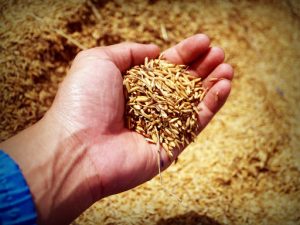
The problem has been particularly acute with organic feed grains, mainly corn, soybeans, wheat, oats, and barley. According to a 2019 USDA report, organic corn is only about 0.3% of total corn and organic soybeans are 0.2% of total soybeans. Organic wheat and barley also make up much less than 1% of the total acreage of those crops as well. The shortage should pose an opportunity for farmers to transition, but for many reasons it has not. As a result of this shortage, there was a ten-fold increase in the imports of organic grains into the US between 2006 and 2016.
In 2017, the organic world was rocked by a scandal exposed by the Washington Post. Grain imported from Turkey in containers was labeled as organic, but originated from non-organic fields in the Black Sea region. It arrived in ships loaded to the plimsoll.
Not all fraud in the organic market is from imports. In 2019, Randy Constant of Ossian, Iowa pled guilty to sales of an eye-popping $142 million worth of falsely labeled organic feed grains sold by his company, Jericho Solutions. The elaborate interstate racket took place over a five-year period with several accomplices in an elaborate con game. By some estimates, at the peak of Constant’s fraudulent grain scheme, it accounted for 7% of the organic feedstuffs market.
Fraud undermines consumer confidence and hurts legitimate organic producers through unfair competition. In response to the fraud, the USDA has proposed some of the most sweeping amendments to the National Organic Program rule since it was first promulgated in 2000. The deadline for comments is October 5, 2020. Titled “Strengthening Organic Enforcement”, the proposed rule contains 13 provisions. Many seek to close loopholes exploited to perpetrate and conceal fraud.
In brief and often in the weeds, the proposed provisions seek to:
- Reduce the number of entities in the supply chain that operate without USDA oversight, including importers, brokers, and traders that currently claim they are exempt from the NOP regulation.
- Require that all organic products entering the US are accompanied by NOP import certificates, or their equivalent, to create a stronger audit trail.
- Clarify and strengthen the USDA’s enforcement authority and provide greater on-going oversight of Accredited Certifying Agents (ACAs).
- Clarify the labeling required on non-retail containers used to ship or store organic product.
- Specify a minimum number of unannounced inspections that ACAs conduct of the operations subject to their oversight.
- Require ACAs to issue standardized certificates to certified operations, and enter consistent data in the Organic Integrity Database.
- Clarify that certified operations only need to submit changes to their organic system plan during their inspection and that ACAs must conduct annual inspections.
- Establish specific qualification and training requirements for ACA personnel, including inspectors and certification reviewers.
- Clarify the conditions to establish, evaluate, and terminate equivalence determination with trading partners.
- Clarify and strengthen enforcement procedures, particularly limiting the scope of what adverse decisions can be appealed.
- Establish certification requirements for grower groups.
- Clarify the requirements of minimum organic content in multi-ingredient organic products with non-organic ingredients.
- Require improved recordkeeping, fraud prevention, and auditing procedures.
Credit needs to be given to the USDA for recognizing that the organic community faces a serious problem. Approaches to strengthen enforcement on the supply side and administrative requirements will help deter fraud, if adopted and applied. For example, many handlers currently claim to be exempt. Even when they don’t qualify for exemption, grifters like Constant show they can evade detection for years.
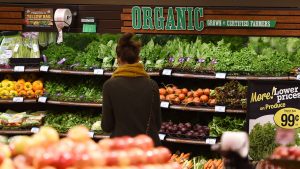
Retailers—either knowingly or unknowingly—are also driving fraud by setting unrealistic price points from vendors and co-packers. Retailers and brand owners are claiming exemption from certification as they use increasingly complex and opaque supply chains to fill store shelves with organic products.
The USDA proposal is not perfect. The organic community is encouraged to study it carefully and provide constructive comments. No doubt some of the proposed regulations will have unintended consequences. Some of the measures may even be counterproductive.
I’m concerned that some of the administrative requirements will punish the innocent with more red tape, while doing nothing to deter guilty criminals. Clearly, better qualified certification personnel are needed to meet new requirements imposed on ACAs and their inspectors. Otherwise, the amendments may actually impair the ability to detect and prosecute fraud.
However, none of the provisions address the root cause of fraud and what is driving it: Greater demand for organic food than U.S. organic farms can currently supply.
By now, it is obvious that current U.S. and European demand for organic feed grains cannot be met by legitimate organic product. If the organic livestock sector is to continue to grow, more land needs to be transitioned to organic. Full stop.
If it is cheaper and risk-free to substitute conventional grain with impunity, then that will continue to happen. The organic community needs to wake up to the fact that we are dealing with domestic and international organized crime on a massive scale, especially with “organic” feed grains coming from eastern Europe.
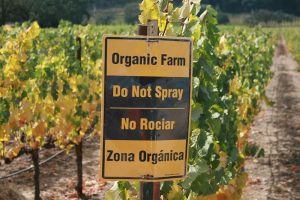
The OTA Grains Council identified U.S. barriers to the adoption of organic practices. One barrier that they did not mention, but should have, is the widespread fraud that drives down prices and increases market risk.
Because it takes three years to transition cropland to organic production, only the highly motivated—or desperate—take the plunge. As a result, the expansion of the U.S. organic feed grain supply is slow and constrained.
We need creative solutions to a complex set of problems. Here are a few ideas:
Link Expansion of Organic Animal Production to Proportional Expansion of Feed and Forage Production Capacity
Much of the demand for organic feed has come from large-scale confined animal feeding operations (CAFOs) that are certified organic. In between the first and second proposed NOP rule, the USDA raised the question as to whether factory farms should even be eligible for certification. The response from the organic community — and consumers — was overwhelmingly “No!”
Poultry integrators can start an organic chicken operation quickly and without transitioning any land — and they have. The contentious and still challenged withdrawal of the Organic Livestock and Poultry Practice standard has permitted these CAFOs to remain certified.
Organic Valley has pioneered transition payments for future organic feed and forage sources, but that has not been adopted by other handlers of livestock products. In the absence of policy changes to reduce the cost or increase the incentives when transitioning cropland to organic systems, organic feed prices will need to rise significantly to create a sufficient incentive for transition.
Pay Transitioning and Organic Farmers for Ecosystem Services
One attractive option is for a public-private partnership to establish land area payments for the transition and maintenance of land in organic production. Many scientists have concluded that a global campaign to sequester carbon via enhancement of soil organic matter, coupled with a phase out of most fossil fuels, is the only realistic path to save life as we know it on planet earth.
Organic farmers thrive only when they build and sustain high levels of soil organic matter. Tying farm income support programs—including crop insurance—to maintaining and improving soil organic matter and soil quality will help ensure current farm income does not come at the expense of future productivity and accelerated climate change.
Level the Playing Field between Conventional and Organic
A policy intervention like this would not cost any more money and would have tons of leverage given the historically high level of federal subsidies now flowing to production agriculture. The subsidies that continue to make conventional grain a “no lose” proposition put organic commodities at a competitive disadvantage.
Conventional farmers are faced with incentives to apply more fertilizers and pesticides than needed to qualify for such programs, rather than having those inputs priced to reflect their costs to human health and the environment. By internalizing conventional farming’s external costs, and paying producers who maintain soil health, farming and food will more fully reflect its true cost.
Eliminate the Replacement Dairy Stock Loophole
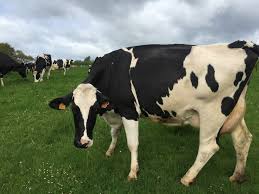
Another loophole that needs to be closed is the origin of organic livestock. Some dairy producers are selling heifers to be fed conventional feed, and then buying them back a year before they start milking them. Despite a directive from Congress, the USDA still has not acted on the National Organic Standards Board’s (NOSB’s) recommendation. This is nothing short of blatant organic feed fraud disguised as bending the rules. It is one more practice that puts integrated crop-livestock dairy producers who have well-managed pastures at a competitive disadvantage to CAFOs that rely heavily on purchased grain.
Hold Accountable the Beneficiaries of Fraud
By allowing organic factory farms to be certified without requiring them to support the transition of sufficient land to meet their animal feeding requirements, the USDA created an incentive for growth of both home-grown fraud and bogus imports. This bad mojo has festered for 20 years, allowing the volume of fraudulent organic feed grains to mushroom.
Interdiction of the shipments from the Black Sea region and the closure of Jericho Solutions did nothing to reduce the demand for organic feed. The animals on factory farms eat every day. These livestock producers have standing orders and are going to get the grain they need one way or another. The longer the USDA lets factory farms be certified without building the supply of organic feed, the worse the imbalance will get.
Small- and mid-sized organic operations will undoubtedly be hurt by the fallout. The feed mills and livestock producers buying bogus feedstuffs are either victims of fraud or accessories to it—most are likely a bit of both. Falling for a scam once is forgivable; continuing to profit from the scam after it has been brought to light is not. Until those who benefit from cheap, fraudulent organic grain are held accountable, the problem will continue to exist.
Detect Fraud and Deal With It in Real Time
Once grain is found to be mislabeled or fraudulent, it should be diverted immediately to the conventional market. If such grain makes it onto an organic livestock operation, there should be consequences sufficient to trigger heightened discipline in assuring sources of organic feed grains are legitimate.
At the end of the day, the most important measure to reduce organic fraud will be to expand the supply of legitimate, U.S. grown organic product. Rooting out fraud is only one, necessary step.
Based on my years working with and on behalf of organic farmers, here are seven concrete steps that will accelerate the transition of cropland to organic production:
- Recognize that regulations and the market are not enough to expand supply of organic food. Increases in demand must be tied to investments to increase supply. Evaluate and update the National Organic Action Plan to see what is needed to expand organic acreage, build organic capacity, and overcome barriers to the adoption of organic practices. Implement the plan at all levels in both the public and private sectors.
- Target the root cause of fraud by closing loopholes and exemptions for retailers, brokers, handlers, integrators, feedlots, and others who profit from artificially cheap organic food and feed. In egregious and clear-cut cases, hold bad apples financially accountable.
- Level the playing field between organic and conventional farms by internalizing the external costs of conventional farming.
- Make it clear that organic farming is a soil-based system based on ecological principles and practices.
- Establish green payments for transitioning and organic farms for the provision of carbon sequestration, beneficial habitat, and other ecosystem services.
- Restore the Organic Livestock and Poultry Practice standard and eliminate landless factory farms with zero transition times.
- Eliminate the replacement organic dairy stock loophole NOW!
It is time to make the transition to organic farming a win-win for consumers, the environment, and farmers.
The opinions expressed are Dr. Baker’s alone and do not reflect the opinions of his clients, or Benbrook Consulting Services and Hygeia Analytics.