

Two years ago in 2017, scientists with the USGS and the University of Iowa first reported that neonicotinoid insecticides were “persistent” in drinking water samples collected at the University’s Iowa City campus during a seven week period after the corn planting season (May-July).
The reason why was no mystery — at least 80% of the GMO corn and soybean seeds planted in the U.S. (and Iowa) are coated with neonic seed treatments to kill soil-dwelling insects that love to munch on tender, new root growth.
This 2017 study revealed that the most commonly used class of insecticides in the country was ending up in the water supply and not being removed by the water treatment process, at least on the University of Iowa campus. Plus, the researchers warned that these neonics could potentially interact with chemicals used in the water purification process, like chlorine, and form new, more toxic compounds.
In their latest paper, which was just released ahead of publication in the peer-reviewed journal Environmental Science & Technology Letters, the research team reports that their worries were, unfortunately, well founded.
Neonics were again present in water samples taken from the U of I campus and nearby homes in Iowa City. Plus, they found two known metabolites of imidacloprid (one of the most commonly used neonics) in tap water samples: desnitro-imidacloprid and imidaclorprid-urea.
This is the first time these two compounds, which are much more toxic to mammals than the neonics they are derived from, have even been reported in drinking water. Desnitro-imidacloprid, for example, is 317 times more toxic than its parent compound imidacloprid (Klarich Wong et al., 2019). Accordingly, EPA’s assessment of neonic drinking water risks in Iowa likely underestimate actual human-health risks, and by a surprisingly wide margin.
In this most recent study, the team documented that neonics and their metabolites do, in fact, react with the chlorine used in the water purification process to form new, unknown chemical compounds. In a blog about the new research Jennifer Sass, a senior scientists with NRDC, explains it this way:
“The neonic compounds or their metabolites that are generated in the environment are transformed into disinfection byproducts during common, important drinking water treatment processes used to protect public health, such as chlorination” (Sass, 2019).
These chlorinated disinfectant byproducts, or DBPs, “are untested, untracked, and potentially harmful….Other types of disinfection byproducts in drinking water are highly toxic, linked to a risk of cancer and birth defects” (Sass, 2019).
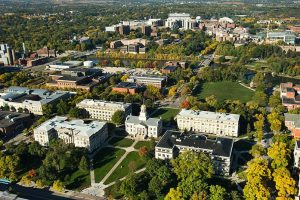
Tap water samples from two buildings on the U of I campus and three homes in the city were analyzed in this most recent study. Water treatment plants used by the University and Iowa City are similar, although the 2017 paper documented that the granulated activated carbon (GAC) filter bed used only at the city’s plant was significantly better at removing neonics from the water samples.
The team tested each sample for the neonicotinoids clothianidin, imidacloprid, and thiamethoxam, and for the DBPs desnitro-imidacloprid, and imidacloprid-urea. They also ran the samples through a simulated water treatment process in the lab, allowing them to monitor the formation of DBPs and identify any compounds formed.
All samples from both the U of I and the city contained measurable amounts of desnitro-imidacloprid, with 67% of the samples with levels above the limit lof quantification. This included all four samples from the U of I, and 2 out of 5 samples from Iowa City, with desnitro-imidacloprid concentrations ranging from <0.03 to 0.60 ng/L.
Residues of all three neonics were also found in tap water in concentrations similar to what the team reported in 2017, although they did observe lower levels of clothianidin and imidacloprid in the U of I samples. This reduction is attributed to modifications made to the University’s water treatment plant in response to the research team’s initial report of neonic contamination in their drinking water.
The paper’s authors propose that the DBPs are formed when the parent neonics react with the chlorine used in water treatment plants. They identified, named, and proposed chemical structures for 10 new compounds formed by the three neonics and the two metabolites in the laboratory simulation. The toxicity of these newly recognized chemicals to humans and the environment is unknown (Klarich Wong et al., 2019).
Remember, these are chemicals that are either known to be present, or likely are present based on laboratory simulations, in measurable amounts in tap water that is being consumed by tens of thousands of people who live on the University of Iowa campus or in nearby Iowa City, and possibly tens of millions across the Cornbelt.
For now, we can only guess at the public-health impacts and hope that they are non-existant or very modest.
Sources:
Klarich Wong, Kathryn L., Webb, Danielle T., Nagorzanski, Matthew R., Kolpin, Dana W., Hladik, Michelle L., Cwiertny, David M., & LeFevre, Gregory H., “Chlorinated Byproducts of Neonicotinoids and Their Metabolites: An Unrecognized Human Exposure Potential?,” Environmental Science & Technology Letters, 2019, 6(2), 98-105. DOI: 10.1021/acs.estlett.8b00706.
Klarich Wong, Kathryn L., Pflug, Nicholas C., DeWald, Eden M., Hladik, Michelle L., Kolpin, Dana W., Cwiertny, David M., & LeFevre, Gregory H., “Occurrence of Neonicotinoid Insecticides in Finished Drinking Water and Fate during Drinking Water Treatment,” Environmental Science & Technology Letters, 2017, 4(5), 168-173. doi:10.1021/acs.estlett.7b00081.
Sass, Jennifer, “Neonic Pesticide May Become More Toxic in Tap Water,” NRDC, Date posted: February 4, 2019, Date accessed: February 20, 2019.