
Hygeia AnalyticsLogo

Menu

Skip to content
  • Home
  • About Hygeia
    Analytics
    • Dynamic Presentations
    • Keywords and Site Map
    • Hygeia Analytics – Who We Are
    • Why Hygeia?
    • Funding and “Sound Science”
    • Acronyms and Glossary
    • Sign-Up for Updates
  • Nutrition
    • Introduction and Nutrition 101
      • Good Fat Bad Fat
      • Fatty Acids
        • Primer on the Fatty Acids in Milk
      • Impact of Livestock Feeding
    • Antioxidants
      • Organic Farming Elevates Antioxidants
      • Maximizing Antioxidant Intake
    • Organic vs. Conventional Foods
      • Milk and Dairy Products
        • 2018 Grassmilk Paper
        • PLOS ONE Study
        • Dairy Meta-Analysis
      • Multi Food Meta-Analyses
        • Meat Products
        • Plant-Based Foods
        • Smith-Spangler et al.
        • Dangour et al.
        • The Organic Center Report
      • Food Specific Comparisons
        • General
        • Fruits and Vegetables
        • Wine and Wine Grapes
    • Considering Nutritional Quality
      • Impact of Genetics and Production Systems
      • New Tool for Food Security
      • Transforming Jane Doe’s Diet
      • Nutritional Quality Index
    • Nutrient Decline
    • Other Choices and Challenges
      • Human Health
      • Dietary Choices
  • Pesticides
    • Usage
      • Pesticide Use Data Sources
        • Pesticide Use Indicators
      • PUDS – The Pesticide Use Data System
    • Dietary Risks
      • The Dietary Risk Index (DRI)
    • Risk Assessment and Regulation
      • Food Quality Protection Act (FQPA)
      • Glyphosate/Roundup Case Study
      • The Lowdown on Roundup
      • Does Glyphosate/Roundup Cause Cancer?
      • 2019 Glyphosate Genotoxicity Paper
    • Impacts of GE on Pesticide Use
    • Environmental, Human Health, and Other Impacts of Pesticides
  • Ag Biotech
    • Key Historical Documents – Donald Duvick
    • Key Historical Documents – Arpad Pusztai
    • Herbicide Resistant Crops
    • Weed Resistance
    • Bt Transgenic Crops
    • Resistant Insects
    • Health Risks and Safety Assessments
    • Regulation of GE Crop Technology
    • Marketing, Economics, and Public Relations
    • Patenting and Intellectual Property Issues
    • Labeling
  • Other Issues
    • Animal Products
    • The Future of Food
    • Global Food Security
    • Natural Resources and Climate Change
    • Alternatives to Industrial Ag
    • Policy and Politics
    • Scientific Integrity
    • Soil Health
    • Yields
  • Recent Posts
    • Hot Science
    • In The News
    • Hygeia’s Blog
  • Special
    Coverage
    • Organic Apples in Washington State
    • Dicamba Drift Crisis
    • Organic Food Consumption Lowers Cancer Risk
    • Organic Integrity

Common Insecticide Causes Significant Neurological Deficits in Children

Posted on December 14, 2016 in Pesticides | 251 Views

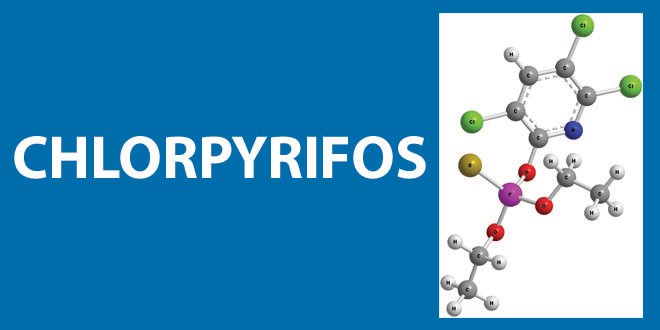
The organophosphate (OP) insecticide chlorpyrifos is still sprayed on over two dozen crops, leading to periodic residues in many common foods.  Until December 2001, chlorpyrifos was also one of the most widely used insecticides in the home, schools, and residential environments.  Products containing this OP insecticide were spayed in and around homes for control of termites, cockroaches, ants, and other insects.

A June 2000 agreement between the major chlorpyrifos manufacturer, Dow AgroSciences, and the Environmental Protection Agency (EPA) led to the withdrawal of essentially all indoor chlorpyrifos uses by the end of 2001

A team led by Dr. Robin Whyatt at the Center for Children’s Environmental Health, Columbia University, studied exposures to chlorpyrifos among a group of 648 pregnant women living in large apartment buildings in New York City.  This long-term project began in 1997.  The team measured indoor exposures to chlorpyrifos in the air in apartments, as well as in umbilical cord and maternal blood soon after giving birth.  These measures provided an accurate estimate of each woman’s exposure levels.

All mothers in the study were divided into one of four chlorpyrifos exposure levels ranging from undetectable to an average of 63 picograms per gram of blood in the high-exposure group. Birth outcomes and infant development in the low-exposure group were then compared to high exposure infants.  In previously published work, Whyatt et al. (2004) reported significant impacts of chlorpyrifos exposures on birth weight and length.  In the current research, the team studied the neurological development of the children at 12, 24, and 36 months of age.  Standard methods for assessing cognitive developmental, motor skills, and behavior were used.

At 36 months of age, children in the high exposure group were 4.9 times as likely to display mild to significant psychomotor skill developmental delays, based on a sophisticated regression analysis of the results taking into account possible confounding variables.  High-exposed children were also 2.4 times more likely to have impaired mental abilities.  High-exposure children were also about five-times more likely to develop attention-deficit/hyperactivity disorder (ADHD), and were almost ten-times more likely to have attention problems.

Study results lead the authors to report three conclusions.  Chlorpyrifos exposures in this group of infants caused:

  • Significant mental and motor skill developmental delays;
  • The adverse impacts on neurological development increased over time; and
  • By age three the highly exposed children were more likely to score in the clinical range for ADHD and “Pervasive Developmental Disorder” (PDD) problems.

Work on this cohort of children is ongoing and will no doubt lead to additional insights into the degree to which prenatal OP exposures can trigger developmental deficits.

Sources:  “Impact of Prenatal Chlorpyrifos Exposure on Neurodevelopment in the First 3 Years of Life Among Inner-City Children.”

Authors: Virginia Rauh, Robin Garfinkel, Frederica Perera, Howard Andrews, Lori Hoepner, Dana Barr, Ralph Whitehead, Deliang Tang, and Robin Whyatt

Pediatrics, Vol. 188, No. 61845-1859.  Published online November 20, 2006.

References

Robin Whyatt, D. Camann, and Frederica Perera. 2004. “Prenatal insecticide exposure and birth weight and length among an urban minority cohort.”  Environmental Health Perspectives, Vol. 112:1125-1132.

Posted in Pesticides | Tagged Children, Human Health, Organophosphate, Pesticide Impacts. Dietary Risks

Related Posts

Will This 9th Circuit Order Finally Get Chlorpyrifos Out of the Food Supply?→

Research Links Childhood Stress to the Microbiome in Pregnancy, and Suggests Protective Role of Omega-3 Fatty Acids→

FAQs re Biden-Harris Ag and EPA Transition Priorities→

Neonic Seed Treatments in the (Science) News→

Dr. Benbrook Testifies Before the Philadelphia City Council as they Consider Glyphosate Ban→

The DRI — A New Tool for Tracking Pesticides in Food→

Guest Blog: The Big Meat Gang Is Getting Awfully Smelly→

Why Promoting Organic Integrity Must Become a Top Priority for USDA→

©2016 Hygeia-Analytics.com. All Rights Reserved.

Menu