
Hygeia AnalyticsLogo

Menu

Skip to content
  • Home
  • About Hygeia
    Analytics
    • Dynamic Presentations
    • Keywords and Site Map
    • Hygeia Analytics – Who We Are
    • Why Hygeia?
    • Funding and “Sound Science”
    • Acronyms and Glossary
    • Sign-Up for Updates
  • Nutrition
    • Introduction and Nutrition 101
      • Good Fat Bad Fat
      • Fatty Acids
        • Primer on the Fatty Acids in Milk
      • Impact of Livestock Feeding
    • Antioxidants
      • Organic Farming Elevates Antioxidants
      • Maximizing Antioxidant Intake
    • Organic vs. Conventional Foods
      • Milk and Dairy Products
        • 2018 Grassmilk Paper
        • PLOS ONE Study
        • Dairy Meta-Analysis
      • Multi Food Meta-Analyses
        • Meat Products
        • Plant-Based Foods
        • Smith-Spangler et al.
        • Dangour et al.
        • The Organic Center Report
      • Food Specific Comparisons
        • General
        • Fruits and Vegetables
        • Wine and Wine Grapes
    • Considering Nutritional Quality
      • Impact of Genetics and Production Systems
      • New Tool for Food Security
      • Transforming Jane Doe’s Diet
      • Nutritional Quality Index
    • Nutrient Decline
    • Other Choices and Challenges
      • Human Health
      • Dietary Choices
  • Pesticides
    • Usage
      • Pesticide Use Data Sources
        • Pesticide Use Indicators
      • PUDS – The Pesticide Use Data System
    • Dietary Risks
      • The Dietary Risk Index (DRI)
    • Risk Assessment and Regulation
      • Food Quality Protection Act (FQPA)
      • Glyphosate/Roundup Case Study
      • The Lowdown on Roundup
      • Does Glyphosate/Roundup Cause Cancer?
      • 2019 Glyphosate Genotoxicity Paper
    • Impacts of GE on Pesticide Use
    • Environmental, Human Health, and Other Impacts of Pesticides
  • Ag Biotech
    • Key Historical Documents – Donald Duvick
    • Key Historical Documents – Arpad Pusztai
    • Herbicide Resistant Crops
    • Weed Resistance
    • Bt Transgenic Crops
    • Resistant Insects
    • Health Risks and Safety Assessments
    • Regulation of GE Crop Technology
    • Marketing, Economics, and Public Relations
    • Patenting and Intellectual Property Issues
    • Labeling
  • Other Issues
    • Animal Products
    • The Future of Food
    • Global Food Security
    • Natural Resources and Climate Change
    • Alternatives to Industrial Ag
    • Policy and Politics
    • Scientific Integrity
    • Soil Health
    • Yields
  • Recent Posts
    • Hot Science
    • In The News
    • Hygeia’s Blog
  • Special
    Coverage
    • Organic Apples in Washington State
    • Dicamba Drift Crisis
    • Organic Food Consumption Lowers Cancer Risk
    • Organic Integrity

Mushroom Extract Helps Combat Viruses in Honeybees, Study Finds

Posted on October 5, 2018 in Animals, Environmental Impacts, Hot Science | 672 Views

By: Rachel Benbrook

The Pacific Northwest’s “mushroom man” Paul Stamets partnered with research scientists from Washington State University and USDA to conduct a potentially groundbreaking experiment showing that mushroom extracts can help bees fight off viruses.

The research, published in Scientific Reports, was triggered by Stamets, a mycologist, author, and entrepreneur based in the Puget Sound. He hypothesized that mushrooms with known, anti-viral properties could be helping bees in their day-to-day struggles with viruses, including those introduced by infectious mites.   The story of how he came up with the idea is pretty fascinating (hint — he watched what bees were doing around his mushrooms, and then asked why).

The team mixed extracts from polypore fungi known to have anti-viral properties into the sucrose syrup fed to bees in the experiment, and compared the rates of viral infection with a control group of bees fed sugar syrup only.
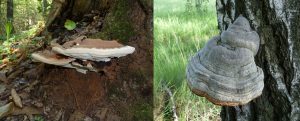
Many polypores grow as shelf fungi on trees or downed wood. Of the five species tested, the artist’s conk (Ganoderma applanatum) and tinder fungus (Fomes fomentarius) showed the most dramatic anti-viral effects on honeybees.

In both laboratory and field studies, bees who drank syrup with the mushroom extract had significantly lower levels of deformed wing virus (DWV) and Lake Sinai virus (LSV), two infections introduced by Varroa mites that are believed to play a role in Colony Collapse Disorder (CCD).

The impact on honeybee viral load was significant. The bees that drank mushroom-extract spiked honey syrup showed a 79-fold reduction in DWV and a 45,000-fold reduction in LSV, compared to the controls.

The study has important implications. Though viral infections “play a significant role in the global
pattern of declining honey bee health … no approved antiviral materials are currently available for beekeepers.”  Plus, domesticated bees can spread viruses to wild pollinators, impacting ecosystems far beyond farm fields.

The hope is that this research will finally provide some tools to battle honeybee viruses.  As they put it “the mycelial extracts tested here are orally active and readily consumed by bees, suggesting potential applications for beekeepers that provide critical pollination services.”

Source:

Paul E. Stamets, Nicholas L. Naeger, Jay D. Evans, Jennifer O. Han, Brandon K. Hopkins, Dawn Lopez, Henry M. Moershel, Regan Nally, David Sumerlin, Alex W. Taylor, Lori M. Carris, and Walter S. Sheppard, “Extracts of Polypore Mushroom Mycelia Reduce Viruses in Honey Bees,” Scientific Reports, October 4, 2018.

Posted in Animals, Environmental Impacts, Hot Science | Tagged Bees

Related Posts

Neonic Seed Treatments in the (Science) News→

California Study Raises the Question: Are Monarchs the New Canary in the Coal Mine?→

Europe is Calling for a 50% Reduction in Pesticide Use by 2030, But Insect Advocates Say More is Needed→

Early-Life Insecticide Exposure Compromises Brain Development in Bees→

Math Mythology and More of the Same: USDA’s Sustainability Plan→

“Environmental Health News” Brings Renewed Attention to Glyphosate Ecological Toxicity→

“Intensive Agriculture” is the Root Cause of Worldwide Declines in Insect Populations, New Global Analysis Shows→

Research Team Documents Key Behavioral Changes in Bumblebees Exposed to Neonic Imidacloprid Using Robot-Guided Camera System→

©2016 Hygeia-Analytics.com. All Rights Reserved.

Menu