
Hygeia AnalyticsLogo

Menu

Skip to content
  • Home
  • About Hygeia
    Analytics
    • Dynamic Presentations
    • Keywords and Site Map
    • Hygeia Analytics – Who We Are
    • Why Hygeia?
    • Funding and “Sound Science”
    • Acronyms and Glossary
    • Sign-Up for Updates
  • Nutrition
    • Introduction and Nutrition 101
      • Good Fat Bad Fat
      • Fatty Acids
        • Primer on the Fatty Acids in Milk
      • Impact of Livestock Feeding
    • Antioxidants
      • Organic Farming Elevates Antioxidants
      • Maximizing Antioxidant Intake
    • Organic vs. Conventional Foods
      • Milk and Dairy Products
        • 2018 Grassmilk Paper
        • PLOS ONE Study
        • Dairy Meta-Analysis
      • Multi Food Meta-Analyses
        • Meat Products
        • Plant-Based Foods
        • Smith-Spangler et al.
        • Dangour et al.
        • The Organic Center Report
      • Food Specific Comparisons
        • General
        • Fruits and Vegetables
        • Wine and Wine Grapes
    • Considering Nutritional Quality
      • Impact of Genetics and Production Systems
      • New Tool for Food Security
      • Transforming Jane Doe’s Diet
      • Nutritional Quality Index
    • Nutrient Decline
    • Other Choices and Challenges
      • Human Health
      • Dietary Choices
  • Pesticides
    • Usage
      • Pesticide Use Data Sources
        • Pesticide Use Indicators
      • PUDS – The Pesticide Use Data System
    • Dietary Risks
      • The Dietary Risk Index (DRI)
    • Risk Assessment and Regulation
      • Food Quality Protection Act (FQPA)
      • Glyphosate/Roundup Case Study
      • The Lowdown on Roundup
      • Does Glyphosate/Roundup Cause Cancer?
      • 2019 Glyphosate Genotoxicity Paper
    • Impacts of GE on Pesticide Use
    • Environmental, Human Health, and Other Impacts of Pesticides
  • Ag Biotech
    • Key Historical Documents – Donald Duvick
    • Key Historical Documents – Arpad Pusztai
    • Herbicide Resistant Crops
    • Weed Resistance
    • Bt Transgenic Crops
    • Resistant Insects
    • Health Risks and Safety Assessments
    • Regulation of GE Crop Technology
    • Marketing, Economics, and Public Relations
    • Patenting and Intellectual Property Issues
    • Labeling
  • Other Issues
    • Animal Products
    • The Future of Food
    • Global Food Security
    • Natural Resources and Climate Change
    • Alternatives to Industrial Ag
    • Policy and Politics
    • Scientific Integrity
    • Soil Health
    • Yields
  • Recent Posts
    • Hot Science
    • In The News
    • Hygeia’s Blog
  • Special
    Coverage
    • Organic Apples in Washington State
    • Dicamba Drift Crisis
    • Organic Food Consumption Lowers Cancer Risk
    • Organic Integrity

“Breakthrough” in Research on the Development of Glyphosate Resistance in Pigweeds

Posted on March 13, 2018 in Hot Science, Pesticides | 315 Views

A new study published in the prestigious journal Proceedings of the National Academy of Sciences takes some of the mystery out of how aggressive weeds like Palmer amaranth and common waterhemp developed resistance to glyphosate herbicides so quickly.

Researchers from Kansas State University have discovered that these pigweeds develop extra-chromosomal circular DNA (eccDNA), genetic material that is not incorporated into the long-strand DNA.  Instead, in these glyphosate-resistant weeds, “the glyphosate target gene, along with other genes actually escaped from the chromosomes and formed a separate, self-replicating circular DNA structure” says says Bikram Gill, director of Kansas State University’s Wheat Genetics Resource Center and study co-author. Dr. Gill’s quote is from a EurekAlert! story about the team’s new paper.

Each cell has hundreds of these eccDNA bundles, and each of these contains its own copy of the gene targeted by glyphosate herbicides.  Thus, the plant is not affected by the glyphosate application.  Plus, eccDNA is easily passed on to a plant’s offspring or other related weeds, so glyphosate resistance can spread in as little as one generation.
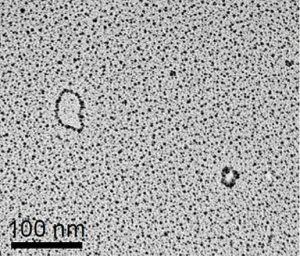
Extra-chromosomal circular DNA (eccDNA), like these eccDNA bundles in a mouse cell, is now known to play a critical role in the development of glyphosate resistance.

Given that eccDNA is known to be unstable, scientists hope that by understanding this mechanism, they will be able to disrupt the development of glyphosate resistance in these common weeds.

There appears to be a window of opportunity here, says Gill, “we have somehow caught it in between becoming permanently resistant. Eventually, we think that these eccDNAs can be incorporated into the linear chromosome. If that happens, then they will become resistant forever.”

In the meantime, this research promotes the current strategy of diversifying the herbicide regimen to avoid spawning resistant weeds.   The absence of “herbicide selection pressure” may result in the breakdown of the eccDNA process, extending the time period during which glyphosate-based herbicides remain effective.

Sources:

Dal-Hoe Koo, William T. Molin, Christopher A. Saski, Jiming Jiang, Karthik Putta, Mithila Jugulam, Bernd Friebe and Bikram S. Gill, “Extrachromosomal circular DNA-based amplification and transmission of herbicide resistance in crop weed Amaranthus palmeri,”  Proceedings of the National Academy of Sciences, published online ahead of print: March 12, 2018.

Kansas State University, “Kansas State University researchers make breakthrough in glyphosate resistance in pigweeds,” EurekAlert!, March 12, 2018.


Posted in Hot Science, Pesticides | Tagged Glyphosate, Herbicide Resistance, Pesticide Impacts, Weeds

Related Posts

Will This 9th Circuit Order Finally Get Chlorpyrifos Out of the Food Supply?→

Implications of EPA’s Decision to Renew Dicamba Registration for Over-the-Top Use→

Neonic Seed Treatments in the (Science) News→

Dr. Benbrook Testifies Before the Philadelphia City Council as they Consider Glyphosate Ban→

Roundup is Safe Enough to Drink, Right?→

This Monster Dose of Innovation is Reason for Hope→

Saving Roundup — Another Shoe Falls→

California Study Raises the Question: Are Monarchs the New Canary in the Coal Mine?→

©2016 Hygeia-Analytics.com. All Rights Reserved.

Menu