
Hygeia AnalyticsLogo

Menu

Skip to content
  • Home
  • About Hygeia
    Analytics
    • Dynamic Presentations
    • Keywords and Site Map
    • Hygeia Analytics – Who We Are
    • Why Hygeia?
    • Funding and “Sound Science”
    • Acronyms and Glossary
    • Sign-Up for Updates
  • Nutrition
    • Introduction and Nutrition 101
      • Good Fat Bad Fat
      • Fatty Acids
        • Primer on the Fatty Acids in Milk
      • Impact of Livestock Feeding
    • Antioxidants
      • Organic Farming Elevates Antioxidants
      • Maximizing Antioxidant Intake
    • Organic vs. Conventional Foods
      • Milk and Dairy Products
        • 2018 Grassmilk Paper
        • PLOS ONE Study
        • Dairy Meta-Analysis
      • Multi Food Meta-Analyses
        • Meat Products
        • Plant-Based Foods
        • Smith-Spangler et al.
        • Dangour et al.
        • The Organic Center Report
      • Food Specific Comparisons
        • General
        • Fruits and Vegetables
        • Wine and Wine Grapes
    • Considering Nutritional Quality
      • Impact of Genetics and Production Systems
      • New Tool for Food Security
      • Transforming Jane Doe’s Diet
      • Nutritional Quality Index
    • Nutrient Decline
    • Other Choices and Challenges
      • Human Health
      • Dietary Choices
  • Pesticides
    • Usage
      • Pesticide Use Data Sources
        • Pesticide Use Indicators
      • PUDS – The Pesticide Use Data System
    • Dietary Risks
      • The Dietary Risk Index (DRI)
    • Risk Assessment and Regulation
      • Food Quality Protection Act (FQPA)
      • Glyphosate/Roundup Case Study
      • The Lowdown on Roundup
      • Does Glyphosate/Roundup Cause Cancer?
      • 2019 Glyphosate Genotoxicity Paper
    • Impacts of GE on Pesticide Use
    • Environmental, Human Health, and Other Impacts of Pesticides
  • Ag Biotech
    • Key Historical Documents – Donald Duvick
    • Key Historical Documents – Arpad Pusztai
    • Herbicide Resistant Crops
    • Weed Resistance
    • Bt Transgenic Crops
    • Resistant Insects
    • Health Risks and Safety Assessments
    • Regulation of GE Crop Technology
    • Marketing, Economics, and Public Relations
    • Patenting and Intellectual Property Issues
    • Labeling
  • Other Issues
    • Animal Products
    • The Future of Food
    • Global Food Security
    • Natural Resources and Climate Change
    • Alternatives to Industrial Ag
    • Policy and Politics
    • Scientific Integrity
    • Soil Health
    • Yields
  • Recent Posts
    • Hot Science
    • In The News
    • Hygeia’s Blog
  • Special
    Coverage
    • Organic Apples in Washington State
    • Dicamba Drift Crisis
    • Organic Food Consumption Lowers Cancer Risk
    • Organic Integrity

Soon There Will Be Four

Posted on October 13, 2017 in GMOs, In The News, Pesticides | 190 Views

Biotech, seed, and ag chemical industry news over the last 18 months has been dominated by the process and impacts of three big mergers — Bayer buying Monsanto, Dow and DuPont merging and then splitting off a combined ag business, and ChemChina’s purchase of Syngenta.

It was inevitable that in this process of consolidation within the biotech-seed-pesticide industry, the Federal Trade Commission in the U.S., and other government bodies responsible for assuring at least a minimal amount of competition in the wake of major industry consolidation, would require some divestiture of assets in the name of preventing any one company from gaining too much clout in specific markets.

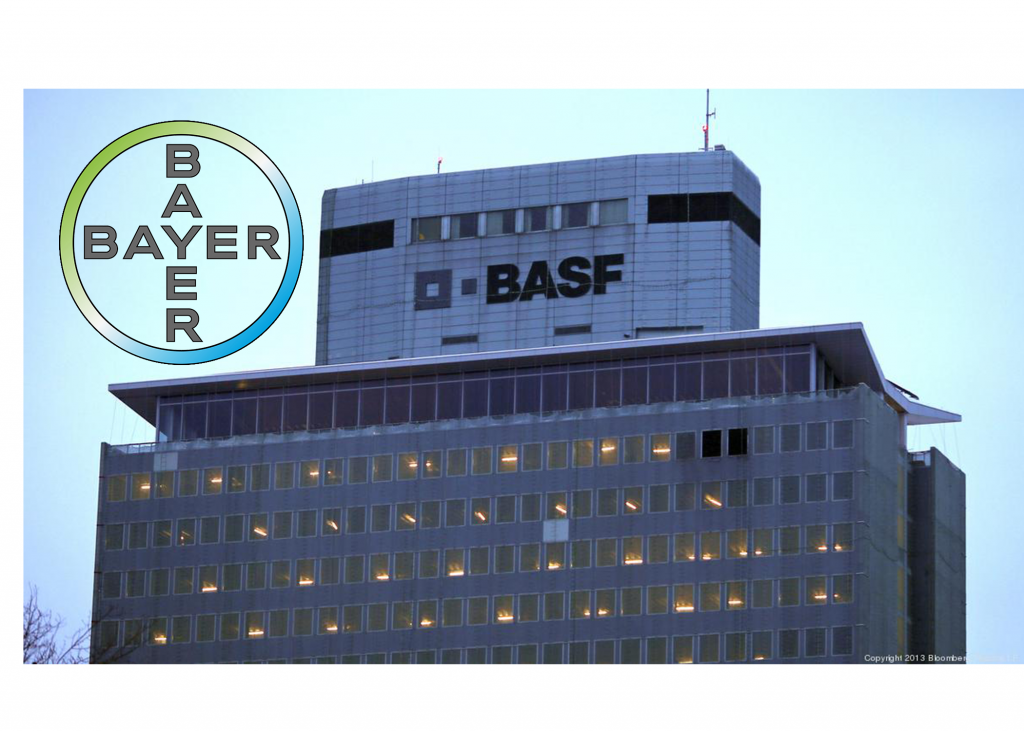
Anyone familiar with the industry expected BASF to take advantage of opportunities to pick up assets as this process unfolds, and so the recent announcement of a $7 billion deal between BASF and Bayer comes as no surprise.

For that $7 billion, BASF will gain control over the entire Liberty (glufosinate) herbicide portfolio and production facilities worldwide, as well as all Liberty-Link seed assets (glufosinate-resistant corn, soybeans, and cotton, and the associated intellectual property).

Most press coverage of the restructuring of the biotech-seed-pesticide industry has focused on a future dominated by three global titans, but as a result of BASF’s desire to take control of divested assets, there will actually be four.

The industry restructuring going on in the last couple of years is hugely significant for two reasons that rarely receive any mention or critical inquiry. First, 20 years ago there were, for the most part, three separate industries producing seeds, pesticides, and new tools to deploy genetic engineering in plant-based agriculture. Once these mergers are complete, there will be one industry where there used to be three. One might ask how that change escaped the attention of  government agencies responsible for assuring competition?

Second, going forward, all major biotech-seed-pesticide companies will be heavily vested in, and dependent on returns from past and ongoing investments in genetically engineered crop technology. In the past, two (BASF and Bayer) of the largest five seed-pesticide firms in the world had resisted the temptation to become heavily involved with GE-based plant breeding and technology development. Soon, all four will be “all in.”

Source:

Maria Sheahan, “BASF to harvest seeds, herbicide businesses from Bayer for $7 billion,” Reuters, October 13, 2017.


Posted in GMOs, In The News, Pesticides | Tagged GE Impacts, Policy and Politics

Related Posts

FAQs re Biden-Harris Ag and EPA Transition Priorities→

Implications of EPA’s Decision to Renew Dicamba Registration for Over-the-Top Use→

Dr. Benbrook Testifies Before the Philadelphia City Council as they Consider Glyphosate Ban→

Guest Blog: The Big Meat Gang Is Getting Awfully Smelly→

Why Promoting Organic Integrity Must Become a Top Priority for USDA→

Guest Blog: Finding the Root Cause of Organic Fraud→

So What About the Integrity of the U.S. Organic Grain Supply?→

Guest Blog: Organic Food & Pesticide Residues, One Grower’s Perspective→

©2016 Hygeia-Analytics.com. All Rights Reserved.

Menu