
Hygeia AnalyticsLogo

Menu

Skip to content
  • Home
  • About Hygeia
    Analytics
    • Dynamic Presentations
    • Keywords and Site Map
    • Hygeia Analytics – Who We Are
    • Why Hygeia?
    • Funding and “Sound Science”
    • Acronyms and Glossary
    • Sign-Up for Updates
  • Nutrition
    • Introduction and Nutrition 101
      • Good Fat Bad Fat
      • Fatty Acids
        • Primer on the Fatty Acids in Milk
      • Impact of Livestock Feeding
    • Antioxidants
      • Organic Farming Elevates Antioxidants
      • Maximizing Antioxidant Intake
    • Organic vs. Conventional Foods
      • Milk and Dairy Products
        • 2018 Grassmilk Paper
        • PLOS ONE Study
        • Dairy Meta-Analysis
      • Multi Food Meta-Analyses
        • Meat Products
        • Plant-Based Foods
        • Smith-Spangler et al.
        • Dangour et al.
        • The Organic Center Report
      • Food Specific Comparisons
        • General
        • Fruits and Vegetables
        • Wine and Wine Grapes
    • Considering Nutritional Quality
      • Impact of Genetics and Production Systems
      • New Tool for Food Security
      • Transforming Jane Doe’s Diet
      • Nutritional Quality Index
    • Nutrient Decline
    • Other Choices and Challenges
      • Human Health
      • Dietary Choices
  • Pesticides
    • Usage
      • Pesticide Use Data Sources
        • Pesticide Use Indicators
      • PUDS – The Pesticide Use Data System
    • Dietary Risks
      • The Dietary Risk Index (DRI)
    • Risk Assessment and Regulation
      • Food Quality Protection Act (FQPA)
      • Glyphosate/Roundup Case Study
      • The Lowdown on Roundup
      • Does Glyphosate/Roundup Cause Cancer?
      • 2019 Glyphosate Genotoxicity Paper
    • Impacts of GE on Pesticide Use
    • Environmental, Human Health, and Other Impacts of Pesticides
  • Ag Biotech
    • Key Historical Documents – Donald Duvick
    • Key Historical Documents – Arpad Pusztai
    • Herbicide Resistant Crops
    • Weed Resistance
    • Bt Transgenic Crops
    • Resistant Insects
    • Health Risks and Safety Assessments
    • Regulation of GE Crop Technology
    • Marketing, Economics, and Public Relations
    • Patenting and Intellectual Property Issues
    • Labeling
  • Other Issues
    • Animal Products
    • The Future of Food
    • Global Food Security
    • Natural Resources and Climate Change
    • Alternatives to Industrial Ag
    • Policy and Politics
    • Scientific Integrity
    • Soil Health
    • Yields
  • Recent Posts
    • Hot Science
    • In The News
    • Hygeia’s Blog
  • Special
    Coverage
    • Organic Apples in Washington State
    • Dicamba Drift Crisis
    • Organic Food Consumption Lowers Cancer Risk
    • Organic Integrity

Could DDT Still be Killing Birds in St. Louis, Michigan? 

Posted on February 4, 2017 in Environmental Impacts, In The News, Pesticides | 1,138 Views

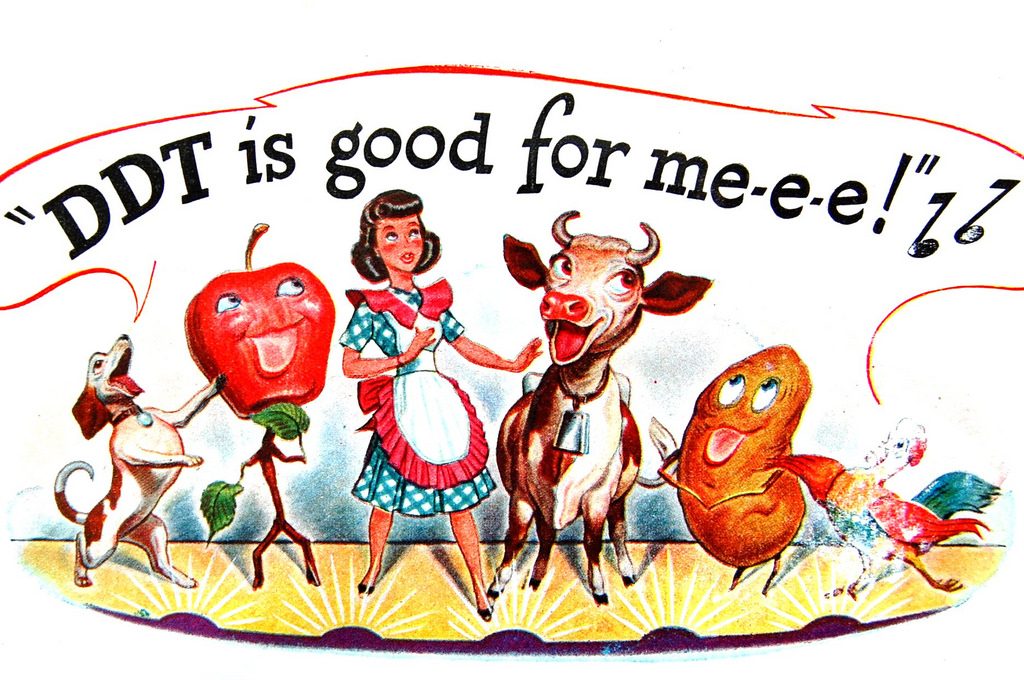
DDT is the chlorinated hydrocarbon insecticide that was developed during World War II and dominated post-war insect pest management for 20+ years. It was the most widely used insecticide in a family of chemistry that included aldrin, dieldrin, toxaphene, chlordane, hepatchor, and a handful of other active ingredients.

It was widely regarded as a miracle chemical, and its use exploded in agriculture, a variety of urban uses, and for vector (i.e., mosquito) control.

Silent Spring, Rachel Carson’s compelling book often credited with starting the environmental movement, focused primarily on the adverse impact of DDT and other chlorinated hydrocarbons on birds. These insecticides are not acutely toxic, and were indeed used to dust soldiers in WWII to treat for lice, but they are persistent (last a long time), tend to lodge in fat, and bioaccumulate up food chains.

DDT and its chemical cousins almost drove the bald eagle to extinction in the 1960s. It also contributed to a rise in breast cancer over at least three generations of women. Its residues linger in soil and still show up at low levels in crops grown in the ground, e.g. carrots, potatoes, beets, peanuts, onions, among others.

When DDT was approved for widespread use, scientists did not understand how it would behave in the environment, nor its ability to trigger epigenetic changes during fetal development that increase the odds of breast cancer, obesity, diabetes, and other metabolic disorders.  There were no clues that top-of-the-food chain predators would be so vulnerable.

Back in its heyday, Velsicol Chemical Company, once called the Michigan Chemical Corp., had a major DDT manufacturing plant in St. Louis, Michigan. In an eenews.net piece entitled “‘Silent Spring’ comes to life in DDT-stricken town” Gabriel Dunsmith reports that for four decades, residents of the town have been collecting dead birds in the spring, 94 in 2012, he reports. So, about 50 years after the last use of DDT in Michigan, birds are still paying the price. And so too are people, given the apparently heightened frequency of a number of cancers in the area.

Fast-forward to 1994. The new neonicotinoid imidacloprid (Bayer’s Admire) was registered for its first large-scale agricultural uses, with a variety of home-pest control uses soon to follow. It was heralded as a breakthrough insecticide, which would reduce agriculture’s dependence on higher-risk organophosphates and carbamate insecticides.

While surely more fully tested than DDT was prior to its commercialization in the late 1940s, much was not known about the environmental fate, toxicity, and eventual uses of the neonicotinoids when they came onto the market.

After about a decade of use, the connection between uses of the neonicotinoids and honey-bee Colony Collapse Disorder came into focus (for more, see our Pollinator Health section).

USDA pesticide residue testing in major fruits and vegetables now shows that most Americans ingest 1-3 residues of neonicotinoids every day (see “Little Known About Those Insecticides in Me and You”)  unless organic produce is sought out and consumed.

New questions are also emerging over neonicotinoid human risks (see “Surprisingly Little Known About the World’s Most Widely Used Class of Insecticides”).  Might residents who live today near neonicotinoid production plants, or just in areas where these insecticides are heavily used, face the same sort of unexpected, hard to detect risks that have plagued St. Louis, Michigan for a half-century? Time will tell.

Source:

Gabriel Dunsmith, “‘Silent Spring’ comes to life in DDT-stricken town,”  E&E News reporter, Thursday, February 2, 2017

Posted in Environmental Impacts, In The News, Pesticides | Tagged Pesticide Impacts

Related Posts

Will This 9th Circuit Order Finally Get Chlorpyrifos Out of the Food Supply?→

Implications of EPA’s Decision to Renew Dicamba Registration for Over-the-Top Use→

Neonic Seed Treatments in the (Science) News→

Dr. Benbrook Testifies Before the Philadelphia City Council as they Consider Glyphosate Ban→

California Study Raises the Question: Are Monarchs the New Canary in the Coal Mine?→

Europe is Calling for a 50% Reduction in Pesticide Use by 2030, But Insect Advocates Say More is Needed→

Implications of the Big Dicamba Decision→

Appeals Court Rules EPA “Substantially Understated” Risks from Dicamba Use, Revokes Registration and Bans Sales of Some Dicamba Herbicides→

©2016 Hygeia-Analytics.com. All Rights Reserved.

Menu