
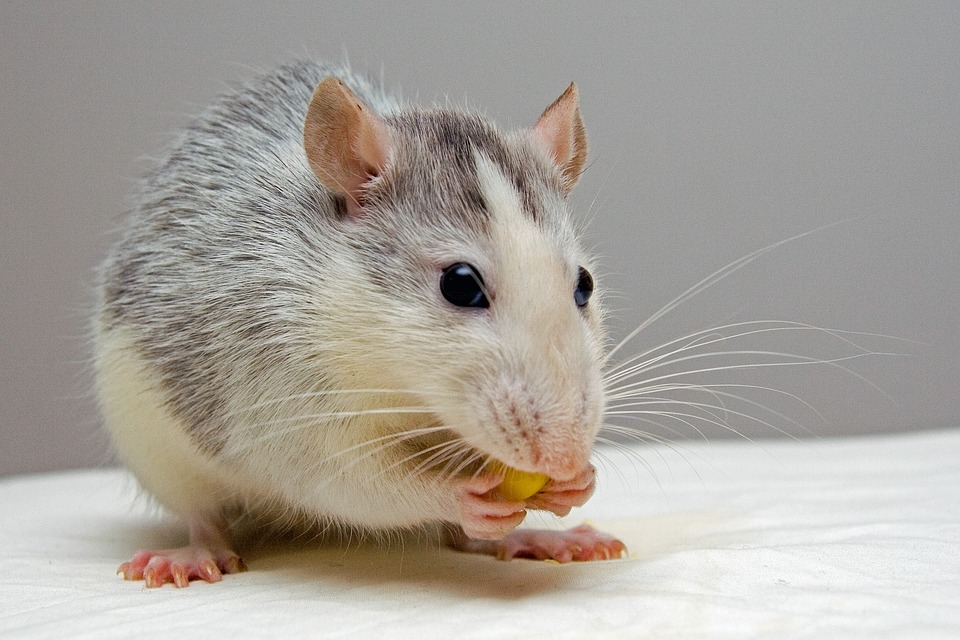
In a paper sure to trigger a full-on immune response from Monsanto/Bayer and ag biotech proponents, rats fed a triple-stack GE corn for about 6 months had clear-cut damage to their stomach lining.
The triple-stack corn fed to the rats expressed two Bt genes (MON 863 and MON 810), and the NK603 gene conferring resistance to the herbicide glyphosate. Globally, this is one of the most widely planted, triple-stack GE corn traits.
The rats fed the GE corn diet had heightened frequency and/or severity of three abnormalities:
- Gaps in the “tight junctions” between cells in the stomach lining (needed to keep the contents of the stomach from leaking into the body cavity).
- Increased frequency of glands of the stomach that were swollen and lined with elongated cells.
- Some cells in the glands of the stomach showed signs of dysplasia, an abnormal form of cell growth that can progress to cancer.
The research was done by an Australia-based team composed of Dr. Irena Zdziarki, Dr. Judy Carman, and Dr. John Edwards. The three co-authors wrote an open-access paper entitled “Histopathological Investigation of the Stomach of Rats Fed a 60% Genetically Modified Corn Diet” published in the journal Food and Nutritional Sciences.
The team anticipates considerable interest — and criticism — of their study because it raises worrisome questions about whether Bt endotoxins, now ubiquitous in the U.S. food supply (and especially in many animal feeds and pet foods), might be contributing to irritable bowel syndrome, or other GI tract problems that have become more common over the last decade or so.
The team prepared a 1.5 page lay summary of the just-published rat study that explains clearly what they did, and what they found.
The present study in rats was designed to answer lingering questions from an earlier study documenting remarkable impacts of Bt corn on the stomach and intestines of pigs.
Going Against the Grain
For years, most scientists and all regulators paid scant attention to the possible human health impacts of Bt corn, and other Bt food and animal-feed crops (cotton, potatoes, eggplant, tomatoes, soybeans). It was generally thought that the Bt proteins in GE crops cannot harm the gut of mammals because their stomach is too acidic, and lacks specific receptors needed to attach the Bt toxins to stomach lining cells.
But the new paper summarizes studies that have tracked Bt toxins successfully passing through mammalian stomachs and GI tracts. Questions linger over when, and what, they break down into.
There are also several important differences between natural Bt toxins produced by soil bacteria, and the activated, truncated Bt toxins expressed in GE plants. Many scientists and studies have explored how these differences alter Bt expression levels in plants, their environmental fate, and toxicity to their target insects. But, almost no research has focused on whether there might be also be differences in human health risks.
One open-access paper explains why these differences should be given more weight in Bt crop risk assessments and regulation. For those wanting a deeper dive, read “The distinct properties of natural and GM cry insecticidal proteins” by Jonathan Latham, Madeleine Love, and Angelika Hilbeck (published in 2017, in Biotechnology and Genetic Engineering Reviews).
For some perspective on this new finding, see the associated blog.
Sources:
Carman, J. A., Vlieger, H. R., Ver Steegd, L. J., Sneller, V. E., Robinson, G. W., Clinch-Jones, C. A., Haynes, Julie, Edwards, John, “A long-term toxicology study on pigs fed a combined genetically modified (GM) soy and GM maize diet,” Journal of Organic Systems, 8:1, 2013.
Jonathan R. Latham, Madeleine Love, & Angelika Hilbeck, “The distinct properties of natural and GM cry insecticidal proteins,” Biotechnology and Genetic Engineering Reviews, 33:1, 2017.
Zdziarski, I.M., Carman, J.A. and Edwards, J.W., “Histopathological Investigation of the Stomach of Rats Fed a 60% Genetically Modified Corn Diet,” Food and Nutrition Sciences, 9, 2018.