
Hygeia AnalyticsLogo

Menu

Skip to content
  • Home
  • About Hygeia
    Analytics
    • Dynamic Presentations
    • Keywords and Site Map
    • Hygeia Analytics – Who We Are
    • Why Hygeia?
    • Funding and “Sound Science”
    • Acronyms and Glossary
    • Sign-Up for Updates
  • Nutrition
    • Introduction and Nutrition 101
      • Good Fat Bad Fat
      • Fatty Acids
        • Primer on the Fatty Acids in Milk
      • Impact of Livestock Feeding
    • Antioxidants
      • Organic Farming Elevates Antioxidants
      • Maximizing Antioxidant Intake
    • Organic vs. Conventional Foods
      • Milk and Dairy Products
        • 2018 Grassmilk Paper
        • PLOS ONE Study
        • Dairy Meta-Analysis
      • Multi Food Meta-Analyses
        • Meat Products
        • Plant-Based Foods
        • Smith-Spangler et al.
        • Dangour et al.
        • The Organic Center Report
      • Food Specific Comparisons
        • General
        • Fruits and Vegetables
        • Wine and Wine Grapes
    • Considering Nutritional Quality
      • Impact of Genetics and Production Systems
      • New Tool for Food Security
      • Transforming Jane Doe’s Diet
      • Nutritional Quality Index
    • Nutrient Decline
    • Other Choices and Challenges
      • Human Health
      • Dietary Choices
  • Pesticides
    • Usage
      • Pesticide Use Data Sources
        • Pesticide Use Indicators
      • PUDS – The Pesticide Use Data System
    • Dietary Risks
      • The Dietary Risk Index (DRI)
    • Risk Assessment and Regulation
      • Food Quality Protection Act (FQPA)
      • Glyphosate/Roundup Case Study
      • The Lowdown on Roundup
      • Does Glyphosate/Roundup Cause Cancer?
      • 2019 Glyphosate Genotoxicity Paper
    • Impacts of GE on Pesticide Use
    • Environmental, Human Health, and Other Impacts of Pesticides
  • Ag Biotech
    • Key Historical Documents – Donald Duvick
    • Key Historical Documents – Arpad Pusztai
    • Herbicide Resistant Crops
    • Weed Resistance
    • Bt Transgenic Crops
    • Resistant Insects
    • Health Risks and Safety Assessments
    • Regulation of GE Crop Technology
    • Marketing, Economics, and Public Relations
    • Patenting and Intellectual Property Issues
    • Labeling
  • Other Issues
    • Animal Products
    • The Future of Food
    • Global Food Security
    • Natural Resources and Climate Change
    • Alternatives to Industrial Ag
    • Policy and Politics
    • Scientific Integrity
    • Soil Health
    • Yields
  • Recent Posts
    • Hot Science
    • In The News
    • Hygeia’s Blog
  • Special
    Coverage
    • Organic Apples in Washington State
    • Dicamba Drift Crisis
    • Organic Food Consumption Lowers Cancer Risk
    • Organic Integrity

Hog Farms in the Carolinas Brace for Hurricane Florence

Posted on September 12, 2018 in In The News, Uncategorized | 548 Views

As the massive hurricane Florence bears down on the East coast, our thoughts are with anyone (including all the critters) in its path.

The immediate concern in the face of such an historic natural disaster is protecting human life from violent winds, storm surge, and widespread flooding. But in the Carolinas, another risk looms.

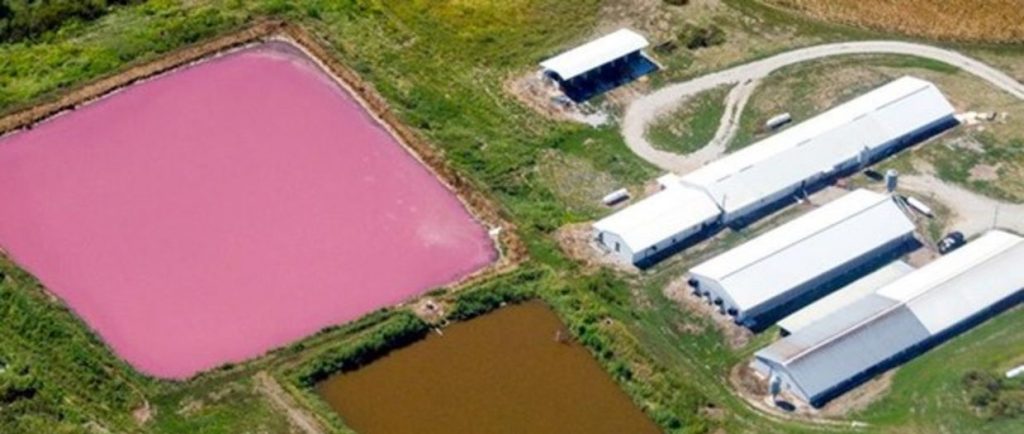
There are hundreds of thousands of hogs, chickens, and other animals on large-scale CAFOs (Concentrated Animal Feeding Operations). Each has some sort of manure storage lagoon. Most are designed to withstand as much as 25″ of rainfall, but the combination of heavy wind and rain — and flooding because all the water has nowhere to go — can  breach the lagoons and lead to massive manure spills.
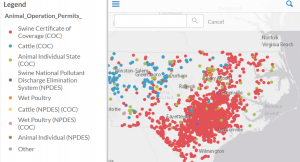
There are thousands of confined animal operations along the Carolina coast, with hog farms (red dots) being by far the most prevalent. (Graphic: AP)

Big storms create storm surge and bring tons of rain.  Catastrophic flooding in areas with dozens of breached manure lagoons create a dangerous mix of bacteria, decaying animal flesh (both farm animals and wild animals), and toxic chemicals. After the storm passes and the sun comes out, the water receded slowly, leaving in its wake large pockets of heavily contaminated water, which can contain a dangerous mix of pathogens and chemicals.

The AP reported on preparations under way across the region in a story this week.  It recalls the extensive damage cause by Hurricane Floyd almost 20 years ago in 1999.  Making landfall as a Category 2 storm (Florence is currently forecasted to hit as a 2 or 3), Floyd dumped up to 2 feet of rain on the region, resulting in “the worst natural disaster in state history.”

The lead photo in the AP story serves a grim reminder of the consequences of that severe flooding – bloated hog carcasses “and other drowned livestock bobbed in a nose-stinging soup of fecal matter, pesticides, fertilizer and gasoline so toxic that fish flopped helplessly on the surface to escape it.”
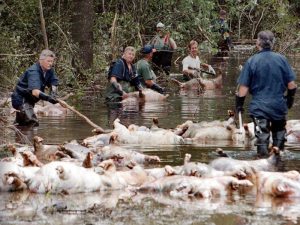
Dead hogs float in flood waters after hurricane Floyd in 1999. (Photo: AP)

The pork industry is hard at work preparing for Florence, lowering lagoon levels by heavy irrigation and stockpiling feed.   Let’s hope the lagoons hold and the storm is not as bad as now feared.

We will keep an eye on this developing story as Florence decides where she wants to land, and just how bad she is going to pummel the Carolina coast.

Source:

Biesecker, Michael, “Hurricane could flood many waste sites, creating toxic brew,” Associated Press, September 11, 2018.

Posted in In The News, Uncategorized | Tagged Climate Change, Natural Resources

Related Posts

FAQs re Biden-Harris Ag and EPA Transition Priorities→

Are We Ready for Grassland 2.0?→

Early-Life Insecticide Exposure Compromises Brain Development in Bees→

Math Mythology and More of the Same: USDA’s Sustainability Plan→

A Closer Look at InsideClimate News’ Award-Winning Series on How American Farm Policy is Deeply Rooted in Resistance to Climate Change Adaptation→

A Tale of Two Dairies: Farms at Risk From the Emerging Threat of PFAS Chemicals→

New Study: Europe Can Feed Itself Without Pesticides and Fertilizers→

Neonic Insecticides and Metabolites ID’d in IA Tap Water, May Become More Toxic from Water Purification Process→

©2016 Hygeia-Analytics.com. All Rights Reserved.

Menu