
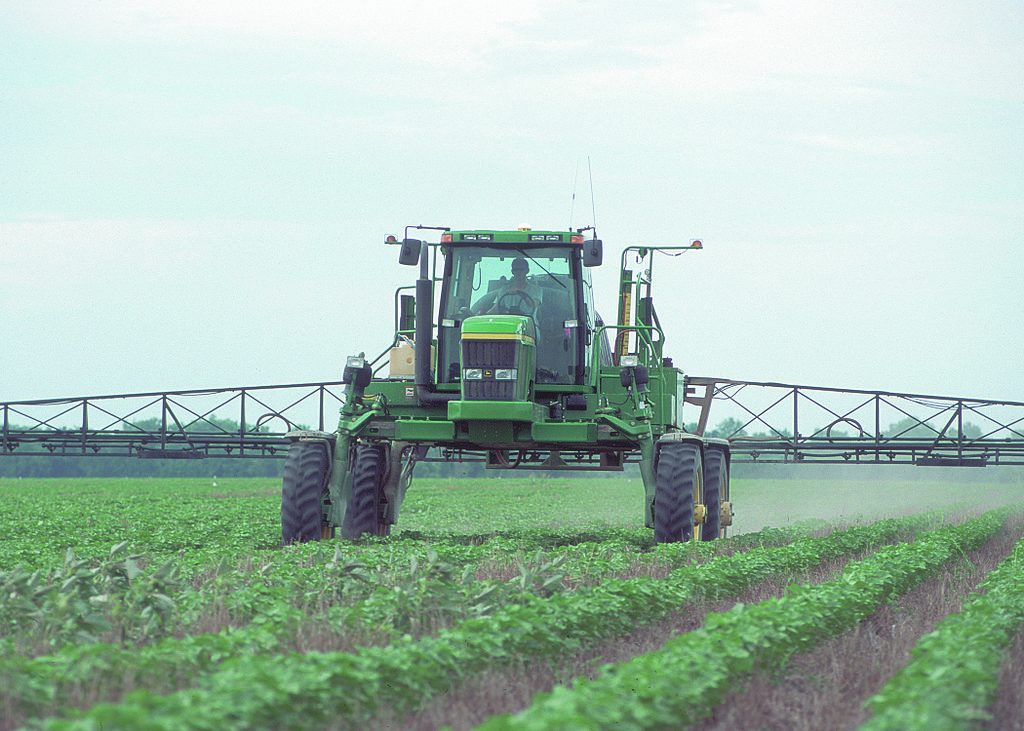
As predicted, the EPA has announced that it will allow use in 2018 of dicamba on dicamba-resistant soybeans and cotton, despite the serious problems that occurred in 2017.
The acting chief of the herbicide branch, Reuben Baris, said the EPA has not yet decided on the “safeguards” it will impose in a September 19, 2017 Reuters story entitled “EPA to allow use of dicamba next year, but with safeguards.”
There is only one thing certain about the “safeguards” EPA will impose on dicamba use next year — they probably won’t do much to reduce off-target movement and damage in sensitive crops within a few miles.
Already, the labels governing use of approved, dicamba formulations for application on dicamba-resistant crops include extensive restrictions on when and how dicamba can be applied. There simply is not much more the EPA can require, without sharply curtailing use of the herbicide, and that they will not do. According to Mr. Baris:
“We’re committed to taking appropriate action for the 2018 growing season with an eye toward ensuring that the technology is available, number one, to growers but that it is used responsibly.”
Let’s review the record in 2016 and 2017 on how “responsibly” dicamba has been used on dicamba-resistant crops.
In crop year 2016, about 4 million acres of dicamba-resistant crops were planted, and essentially 100% of them were treated illegally, since there were no, EPA-approved labels for post-emergent use of dicamba on any soybeans or cotton in 2016.
In crop year 2017, if you believe Monsanto and BASF, most of the drift and damage episodes were the fault of farmers and applicators who did not follow “strict” label requirements. Such lapses led to about 1 acre of damaged crops for every 5 acres planted to a dicamba-resistant crop variety in 2017.
University weed management specialists, however, do not buy this explanation, and have stated in multiple venues that the label is already so restrictive that it is not feasible for farmers and applicators to abide by all provisions, and still cover the ground in need of spraying in a timely way.
How will adding on more restrictions help with this problem?
The stage is now set in 2018 for a colossal meltdown in weed management in the Southeast and parts of the Cornbelt. Glyphosate-resistant weeds will continue to spread and require farmers to spray additional herbicides. Dicamba-resistant weeds already exist, and the heavy selection pressure placed upon them across some 60 millions acres will accelerate their spread.
Farmers paying the big bucks for the newly approved 2,4-D-resistant soybeans are going to be disappointed, as they watch their beans curl up from dicamba drift and off-target movement. Their neighbors growing dicamba-resistant crops will also not be happy, when their crops are comparably damaged by 2,4-D drift.
Also in 2018, some farmers and rural residents will experience, and others will begin to read about, reproductive problems and birth defects possibly triggered by rising herbicide use and exposures. This will darken the shadow already following this flawed technology.
After another rough season in crop year 2018, the EPA will again be forced to tighten regulations to assure “responsible” use of dicamba and 2,4-D.
But in the fall of 2018 as the EPA contemplates its options, over 80% of the soybean seed supply for 2019, and at least 90% of the cotton seed supply, will have either the 2,4-D resistant gene or the dicamba-resistant gene. It is hard to imagine the EPA pulling the rug on most of the nation’s soybean and cottonseed supply, so they will apply more restrictions that again, won’t work very well.
Then, someone will advance a bright idea — let’s move the 2,4-D and dicamba-resistance genes into all soybean and cottonseed, and then drift from a field planted to 2,4-D-resistant seed won’t damage nearby fields planted to dicamba-resistant seed, and vice versa. Brilliant, right?
Source: Tom Polansek, “EPA to allow use of dicamba next year, but with safeguards,” Reuters, September 19, 2017.