
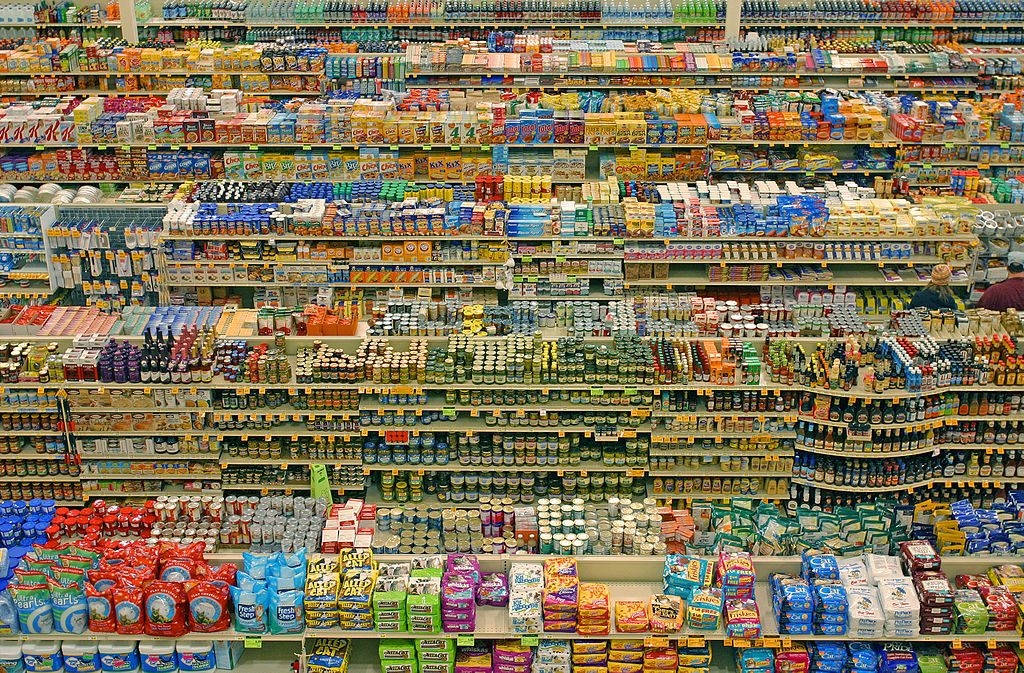
The tagline in the remarkable New York Times story on junk food in Brazil reads:
“As growth slows in wealthy countries, Western food companies are aggressively expanding in developing nations, contributing to obesity and health problems.”
The Times story appeared September 16, 2017 and is accessible online. The authors, Andrew Jacobs and Matt Richtel, explain in detail the process by which Nestle, one of the world’s largest food companies, has encouraged Brazilians to switch from their formerly diverse, nutrient-rich traditional diet composed of dozens for indigenous fruits, vegetables, grains, and animal products. Instead, more and more Brazilians are consuming highly processed foods low in nutrients, but brimming with flavor, mostly from added salt, sugar, and fat. Carlos Monteiro, a professor of nutrition at the University of Sao Paulo states that:
“What we have is a war between two food systems, a traditional diet of real food…[and] ultra-processed food designed to be over-consumed and which in some cases are addictive. It’s a war, but one food system has disproportionately more power than the other.”
The impacts on the health of Brazilians, and people in developing countries worldwide, have been dramatic. Obesity has doubled in 73 countries since 1980, and is rapidly growing worse. There are now far more overweight or obese people than malnourished people, and ironically, a growing share of people who are overweight are also undernourished.
This combination – too many empty calories and not enough of several essential nutrients — triggers the equivalent of a public health tsunami.
The toll on the Brazilian population is already significant. The health care system is struggling to keep up with the rising prevalence of diabetes and its complications, as well as with diet-driven fatty liver disease, cancer, and heart disease.
All of these outcomes were predicted, yet efforts by the Brazilian government to slow the transformation of the Brazilian diet were consistently and systematically undermined by the food industry and its supporters in academia, government, and trade associations.
The contrast is striking between where the U.S. and Brazil stand in the evolution from generally healthy to very unhealthy food systems. Here in America positive change is occurring at every stage of the food system, and once sharply negative trends are flattening out.
Consumers are driving a shift back toward simpler, healthier, and less processed foods. And they are doing so because they understand the connection between unhealthy, processed food and several of today’s most pressing public health problems. The pressure for change is bound to grow, and at least parts of the agricultural, food, and retail industries is responding.
Major structural changes are occurring. Companies based in Europe, South America, and Asia, as well as several government-driven investment funds, are investing billions annually to gain a foothold in the U.S. food system.
The Amazon purchase of Whole Foods is breaking ground in online access and home delivery of healthy, unprocessed or lightly processed organic food, marketed overtly to help America pull out of its obesity and diabetes tailspin. Other players, from WalMart to Publics to General Mills and ConAgra, are taking note and trying to hold onto market share by changing recipes, getting rid of additives, and cutting back on added sugar, salt and fat.
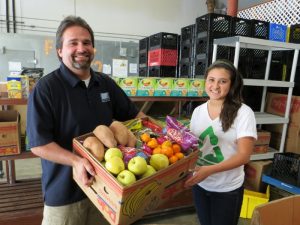
There is another remarkable sea change unfolding in food banks across the country. A September 18, 2017 story by Kristina Johnson in FERN is entitled — “D.C.’s major food bank just cut junk food by 84 percent in a year.” It starts with this paragraph:
“A year ago, Washington D.C.’s Capital Area Food Bank — one of the largest food banks in the country — decided to turn away junk food, joining a growing trend of food banks who are trying to offer healthier options to low-income Americans. From soda to chips, the CAFB has reduced the junk food it supplies to its 444 nonprofit partners, including soup kitchens and food pantries, by 84 percent.”
No doubt about it – good things are happening in the U.S. in direct response to the poor quality of highly-processed food, and the pace of change seems to be accelerating.
The developed world is starting to pull out of a half-century binge on unhealthy food, that’s the good news. The bad news is that the developing world is quickly moving down the same path, in response to the effective marketing initiatives of companies like Nestle. As POTUS would say, “so sad.”
Sources:
Andrew Jacobs and Matt Richtel, “How Big Business Got Brazil Hooked on Junk Food,” New York Times, September 16, 2017.
Kristina Johnson, “D.C.’s major food bank just cut junk food by 84 percent in a year,” FERN, September 18, 2017.