
Historic posts are reprinted verbatim from their original source.
Source: Nature, 11 January, 2001, Volume 409, Issue number 6817
Links between academia and industry are of increasing concern to academics and to society at large. The sectors involved should review their policies in order to sustain universities’ public accountability.
In recent years, many universities have thrived on their relationships with industry. In the sciences, academics and their institutions have benefited from contracts, donations and sponsorship, and from the entrepreneurialism of faculty members – a trait now encouraged by government in most scientifically developed countries. Nowhere is this more so than on the west coast of the United States. One third of all the world’s biotechnology companies were founded by faculty members of the University of California.
The benefits to researchers and universities are many. They include access to industry facilities and databases, financial support for research that can help the university as well as the company, opportunities for academics to tap into the market’s expertise, and the longer-term benefits of experience and contacts.
The downside – for academia at least – of these benefits is becoming increasingly clear. Some of the problems arise in the scientific literature. Recent publications in biomedical journals indicate that researchers sponsored by companies are biased in favour of reporting positive experimental results relating to company products. Undeclared conflicts of interest have occasionally undermined trust in published research and reviews. Other difficulties arise if companies try to restrict academic freedoms or institutionalize industry’s influence. For example, in at least one contract offered to a prestigious university by a multinational chemical company, the company took ownership and rights over all data deposited in their database. The academic involved found the company inflexible on this issue and so withdrew.
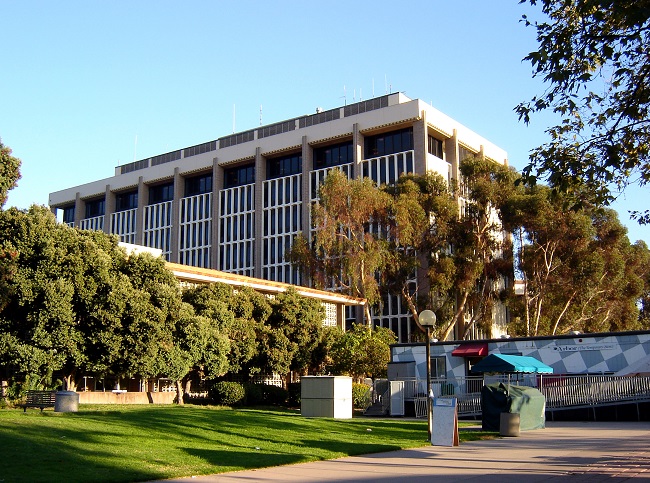
One controversial example of industrial influence is the deal between the University of California at Berkeley and Novartis. The company is paying about $5 million per year for plant research and providing access to its databases; in return, it gains a seat in university and departmental research committees and restricts academics’ freedom to discuss the benefits of the deal. Some students and academics are protesting against the agreement, claiming it undermines Berkeley’s status as a publicly funded and publicly accountable institution.
Anti-corporatism vs anti-liberalism
Protests against over-intimate industrial ties are not restricted to Berkeley. Young biologists at a meeting on genetics and society organized by the European Commission lamented their universities’ increasing dependence on industrial funding, and one patients’ group attacked another for its links to a pharmaceutical company.
Such protests can be seen as the more informed end of the grouping known as the post-Seattle movement. This movement represents an active unease within society: that global corporations have too much unaccountable influence on institutions – including universities – that are meant to act in the public interest. The Novartis-Berkeley deal can all too easily be portrayed as an institution undermining both its motivation and trustworthiness to provide an independent and impartial view of one of the most contentious technologies of our time – genetically modified crops. Although it is unusual in its scope, other universities will recognize the issues it raises.
The chancellor of Berkeley, Robert Berdahl, although standing by the Novartis deal, has expressed his own unease at what he calls the privatization of the public universities. In a recent speech (see http://www.chance.berkeley.edu/cio/chancellor/sp/privatization.htm), he highlighted two forces that are changing the environment for public universities in the United States: declining public funds, and a systematic, successful and entirely legitimate campaign to develop an anti-liberal, right-wing agenda in universities. These two forces, he implies, are stimulating the growth of the university-industrial complex. And the dangers? Loss of cohesion at the university due to salary differentials and market forces; a downgrading of humanities – while the technology-related ethical and social issues that they should address are burgeoning – and a loss of academic objectivity and consideration of the wider world.
New year’s resolutions
So what resolutions are required to maintain public trust in higher education and publicly funded research?
· Vigilance and the ability and determination to speak out. Caught between anti-corporatism and anti-liberalism, academics have to stand up for themselves, with the protection of university constitutions and hierarchies.
· Transparency over conflicts of commitment. There is, for example, a need to prevent the valuable findings of government-funded students and postdocs being inappropriately funnelled into commercial ventures. This could prevent timely publication and lead to commercial ownership of a discovery that was made using public money. There should be limits on, and disclosure of, involvement of faculty members and others in companies.
· Transparency over conflicts of interest. Recent surveys in biomedical journals reveal the pervasive (though highly variable) rules in US universities on disclosure of financial interests. (This journal intends to introduce a disclosure policy of its own in the near future.)
· The issues need to be debated and dangers highlighted at a national level. In this respect the imminent inquiry into university-industrial links by the US national academies’ committee on science, engineering and public policy is timely.
· Industry must help sustain public trust. Some companies approach universities and the knowledge they produce in a way that can be best described as predatory. Occasionally this may yield short-term returns, but public distrust of research can have a powerful impact on regulation and on consumers.
And regional and national governments, although encouraging the university-industrial complex, must keep watch over its development. They must above all underpin the social value and accountability of public universities with strong financial support.